
AI Pricing Strategy: What Top Companies Got Right in 2025 [Case Study]
Your business can achieve significant financial results with the right AI pricing strategy. Companies using AI-powered pricing optimization have seen an 8% revenue increase through varied discount strategies. Setting the perfect price point matters greatly - customers leave when prices are too high, while profits suffer when they’re too low.
Case studies from businesses of all types show the value of AI-driven pricing clearly. A company that used an AI pricing engine improved its margins by 5-11% with prices better matched to customer segments. Smart AI pricing analytics helped another business boost margins by 2-3% by finding the best price points based on market demand. OpenAI shows how AI pricing keeps changing. They charge $2.50 per million input tokens and $10.00 per million output tokens for their GPT-4o model.
This piece looks at successful AI pricing approaches companies used in 2025. You’ll learn about ground implementations that worked, see how to balance making services accessibleyet profitable, and understand ways to adapt these strategies to your business’s needs.
Token-Based Pricing: A New Standard in AI Monetization
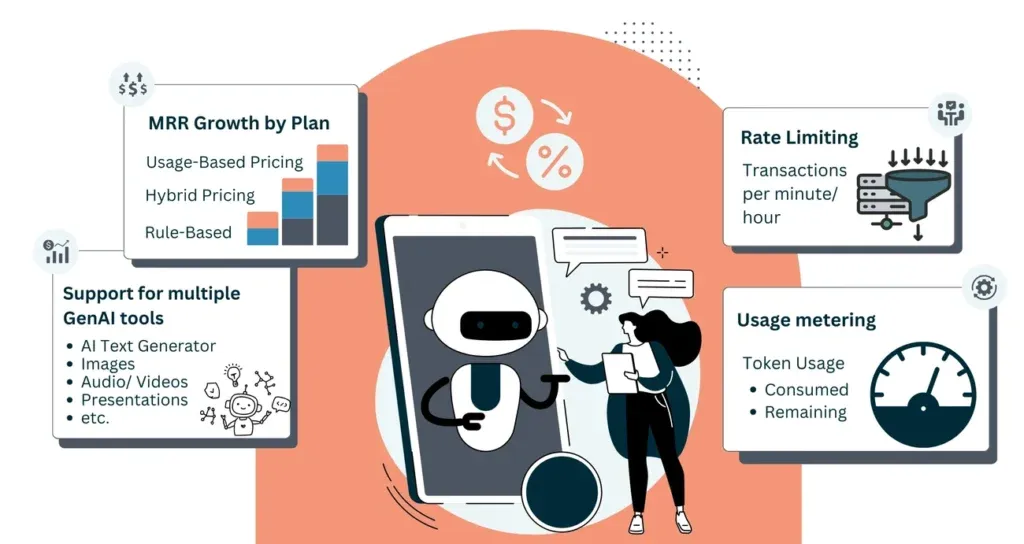
Image Source: OneBill
Token-based pricing has become the main way companies charge for AI services in 2025. This new approach has changed how businesses price artificial intelligence services. The model moves away from traditional software pricing and measures the actual work done. This gives companies a precise way to match costs with usage.
Why tokens work better than raw compute pricing
Tokens are the basic units that AI systems process - small pieces of text, word parts, or single characters. “AI pricing strategy” breaks down into 4-5 tokens based on the tokenization method. This detailed approach creates a perfect match between costs and revenue. Each interaction has a measurable cost that goes straight to customers.
Raw compute-based pricing can’t handle the changing nature of AI workloads. One user prompt might create thousands of tokens through a heavy vision model. Another might process just a few dozen tokens through a simple text classifier. Companies that only track API calls or raw compute time miss this reality.
Businesses can now separate pricing based on the work done:
-
Input tokens (what users send to the model)
-
Output tokens (what the model creates)
-
Cached input tokens (old inputs that need less computing)
-
Audio/visual tokens (that need more processing power)
This setup lets companies charge exactly for the resources customers use. Margins stay steady whatever way customers use their products.
How token pricing lines up with user experience
Token pricing links value and cost directly. Research from Andreessen Horowitz shows 78% of enterprise AI users list cost predictability as their top priority when choosing AI services. Customers trust this clear approach because they don’t feel they’re paying for unused services.
Token pricing makes it easier to start using AI services with its pay-as-you-go model. IDC research backs this up. Usage-based pricing leads the way for SaaS buyers. Prepaid and post-paid options make up 42% of choices, while traditional subscriptions sit at 38%.
Users get more than just financial benefits. Modern token pricing models have:
-
Immediate dashboards that show usage patterns
-
Budget controls that warn about spending
-
Clear pricing that grows with actual use
These features tackle a common issue McKinsey points out - 62% of organizations using token-based AI services saw unexpected costs in their first year.
Case study: GPT-4o pricing breakdown
OpenAI’s GPT-4o model shows smart token pricing at work. The standard prices are:
-
Input tokens: $5.00 per million tokens
-
Cached input tokens: $2.50 per million tokens (50% discount)
-
Output tokens: $20.00 per million tokens
OpenAI gives high-volume users better rates through their Batch API:
-
Input tokens: $1.25 per million tokens (75% discount)
-
Output tokens: $5.00 per million tokens (75% discount)
Companies can cut costs based on how much they use. A text app that processes 5 million input tokens and makes 10 million output tokens monthly would pay about $112.50.
The pricing shows that making output needs more resources than processing input. Most providers price output tokens 2-4 times higher than input tokens. This creates steady economics for both sides.
Token pricing isn’t just a new way to bill customers - it’s a key shift in how we value and pay for AI computing power.
Balancing Access and Cost: The PayGo + Prepaid Model
AI business models deal with a basic money problem. Users just need quick, easy access to innovative technology, but every interaction costs real money that adds up fast. This unique challenge leads companies to create smart pricing strategies that balance availability with financial stability.
The challenge of high-cost AI usage
Traditional SaaS companies can add users cheaply, but AI operations bring big financial risks. Companies must invest millions to train advanced models, and each API call directly affects their profits. More than this, unpaid usage or misuse can substantially hurt profitability, so AI companies must maintain strict controls.
This reality hits businesses hard—some startups use more than 80% of their raised capital on compute resources alone. Such heavy resource use means companies must find pricing models that protect them while staying available to users.
How OpenAI uses prepaid credits to manage risk
OpenAI tackles this with a mixed approach that combines flexible pay-as-you-go with prepaid limits. Their system makes users buy credits upfront instead of sending monthly bills after heavy usage. This prepaid system brings several benefits:
-
Low barrier to entry - Users can start with just $5.00
-
Predictable budgeting - Developers know their costs upfront
-
Controlled scaling - The system automatically deducts usage from credits
-
Transparent consumption - Monthly invoices show credit usage clearly
This model lets users pay based on usage while protecting OpenAI from unpaid bills. Credits last one year, which helps promote responsible usage without rushing to use resources.
Automatic cutoffs and recharges to prevent misuse
The strongest protection in this pricing strategy comes from automatic service stops. API requests return errors once credits run out, which stops unbilled usage. All the same, processing delays can sometimes create negative balances that apply to future purchases.
OpenAI helps keep service running smoothly while protecting finances through automatic recharges. Users set their own thresholds and amounts to automatically buy more credits, which keeps access flowing while controlling spending. The system has budget alerts and limits that tell users when they’re close to their spending limits.
These mechanisms work together to create a balanced pricing system that works for everyone. Users get flexible, low-commitment access to powerful AI tools, while OpenAI stays protected against excessive or unpaid usage that could hurt their business.
This case study shows how AI pricing that balances access and cost helps create sustainable AI businesses in compute-heavy environments.
Billing as a Product Experience, Not Just a Backend Task
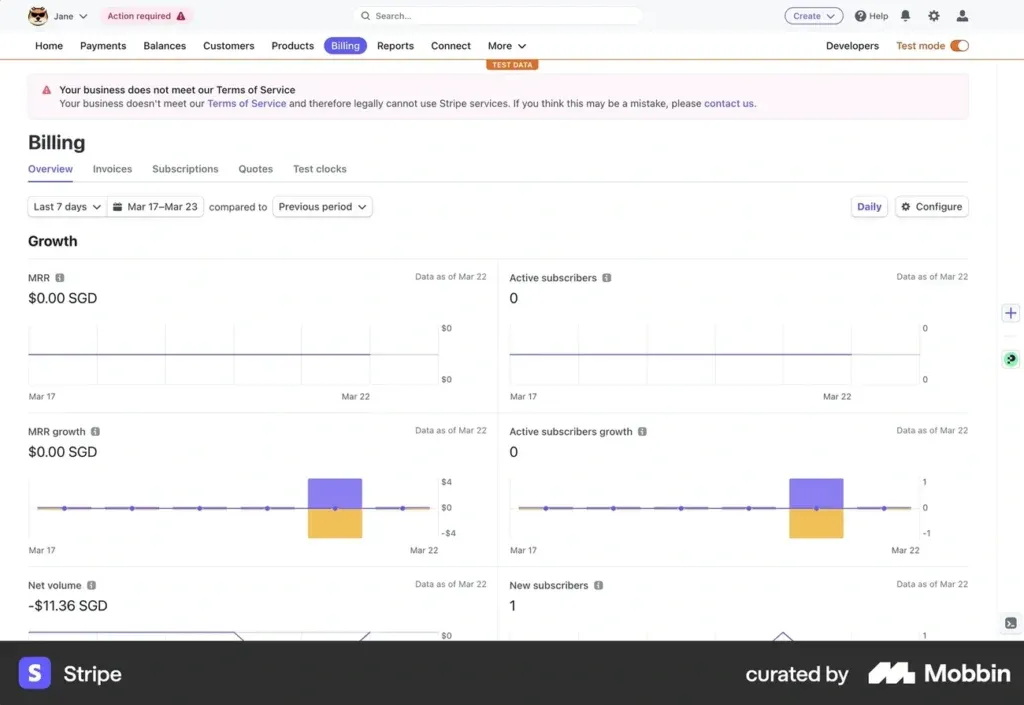
Image Source: UX Collective
Successful AI companies know that billing is more than an administrative function—it serves as a vital touchpoint in the customer experience. These organizations build stronger relationships with users and reduce friction in the adoption process by treating billing as a product experience instead of a backend task.
Up-to-the-minute dashboards and usage transparency
Advanced AI billing interfaces now bring together essential insights through intelligent dashboards that combine scattered data into one complete view. These systems show capacity, project progress, and potential risks instantly. Modern AI pricing engines give users practical information to optimize their spending instead of showing raw data.
Teams that implement these dashboards see a remarkable 40% boost in efficiency when they create, customize, and share insights throughout their organization. This significant improvement stems from:
-
Automatic tracking of performance in all projects
-
Custom views with specific data, filters, and charts
-
Report creation through easy-to-use drag-and-drop widgets
Budget controls and alerts for spend management
Modern AI pricing analytics include features that prevent unexpected costs before they happen. AI-powered spend management removes friction by automating every possible step—from receipt capture to expense categorization to policy violation flags. This automation ensures compliance immediately and creates audit-ready records without the usual administrative work.
Budget control systems now feature customizable thresholds that alert users before they reach spending limits. This approach proves valuable because AI workloads can grow faster, which might lead to unexpected costs that hurt platform trust.
Why billing UX builds user trust
Customer churn often happens because of “confusing bills,” and 40% of contact center calls relate to billing issues—making poor billing experiences a major revenue risk. Yes, it is true that 97% of service providers invest in AI, with almost half their AI budget going toward better customer experience.
AI-driven pricing interfaces build trust through:
-
Clear costs that prevent “bill shock”
-
Self-service options that minimize support needs
-
Individual-specific insights that show value received
The emphasis on billing UX explains why 84% of consumers prefer personalized interactions and switch providers without them. Companies that treat billing as an essential part of the product experience rather than a necessary task create deeper user involvement and lasting customer relationships.
Agile Pricing Updates in a Fast-Moving Market
The ever-changing world of AI demands constant refinement of pricing strategies. The rise of AI pricing has become a strategic priority as companies adapt faster to market conditions and infrastructure costs.
Why AI pricing must evolve with infrastructure
Technology advances cause large language model costs to fluctuate by a lot. Companies that implement AI-powered solutions have seen gross profit increases of 5% to 10% by moving from traditional rule-based approaches to dynamic pricing models. This move proves necessary as businesses deal with persistent cost inflation and supply chain volatility.
Silicon Valley has poured hundreds of billions into building data centers for AI. OpenAI has committed to a $30 billion-per-year contract with Oracle. These massive infrastructure investments will eventually drive prices down, but companies must adjust their pricing to match these changing economics.
How OpenAI rolls out pricing changes without disruption
OpenAI shows agile pricing by treating updates as strategic operations rather than simple price adjustments. The company modified its ChatGPP Enterprise pricing structure from fixed pricing to a credits system, which lets clients upgrade to more advanced tools based on their needs.
OpenAI’s implementation process will give a simultaneous update to all components:
-
Customer dashboards
-
Notification systems
-
APIs and invoicing platforms
-
Budget alert configurations
This coordinated approach prevents gaps between prepaid credit plans and bespoke enterprise contracts that help maintain trust during transitions.
Maintaining consistency across enterprise and self-serve users
OpenAI must balance the needs of various user segments with projected revenue of $15 billion from business customers alone. The company achieves this by offering consistent percentage discounts (10-20%) to enterprise customers who purchase additional products.
OpenAI keeps self-serve users informed through its usage tracking dashboard and lets customers set monthly budgets. This approach prevents unexpected cost surges while vendor revenue stays matched with customer usage patterns.
AI feature development moves faster, and capabilities like semantic search have become baseline expectations rather than premium features. Successful companies recognize this trend and build their pricing strategies to distinguish based on sophistication rather than mere availability of AI functionality.
Building Scalable Infrastructure: The Metronome Case Study
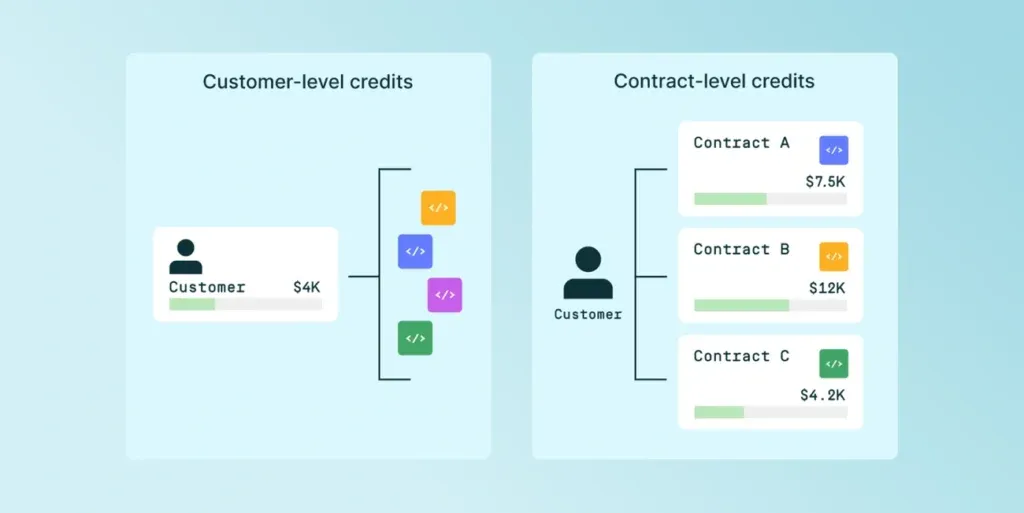
Image Source: Metronome
A resilient infrastructure that scales with growth powers every successful ai pricing strategy. OpenAI’s homegrown billing system struggled to match their rapid expansion, which led them to choose Metronome as their solution to revolutionize their billing operations.
Why OpenAI moved from in-house billing to Metronome
OpenAI started with custom scripts and manual processes to track usage and invoice customers. Their company’s expansion created major operational hurdles. Lauren Workman, Senior Manager of Revenue Operations at OpenAI, said, “I experienced firsthand how painfully manual it was to change pricing and add in new products before Metronome”.
Their in-house system’s limitations became evident quickly. The system lacked “flexibility and customization to support usage-based pricing or enterprise contract complexity”. OpenAI needed a solution to handle their current needs and propel development.
How Metronome supports both self-serve and enterprise models
Metronome helped OpenAI manage self-serve and enterprise use cases through a single platform seamlessly. The platform streamlines customer creation, processes entitlements, and monitors product usage for millions of self-serve users.
Revenue Operations teams can now create customers, manage plans, and set customer- specific alerts without engineering support. This dual functionality proved vital as OpenAI expanded to serve individual developers and organizations of all sizes.
Enabling pricing changes without engineering bottlenecks
Metronome’s impact on OpenAI’s pricing updates stands out remarkably. Their original process took six to eight weeks to implement pricing changes. The new system reduced this time to about one minute.
Metronome’s impact on OpenAI’s pricing updates stands out remarkably. Their original process took six to eight weeks to implement pricing changes. The new system reduced this time to about one minute.
Conclusion
Our analysis shows that AI pricing strategies need multiple factors to work well. Token- based pricing has definitely become the main model for AI monetization. It offers precise matching of costs with usage and creates perfect balance between expenses and revenue while showing clear value to customers.
OpenAI and other companies use a hybrid PayGo + Prepaid model that balances easy access with financial stability. Their approach of prepaid credits and automatic cutoffs manages risk without creating adoption barriers.
OpenAI and other companies use a hybrid PayGo + Prepaid model that balances easy access with financial stability. Their approach of prepaid credits and automatic cutoffs manages risk without creating adoption barriers.
Companies can adapt budget-friendly updates to infrastructure changes and market needs. Knowing how to adjust pricing without disruption gives companies an edge in the fast- moving AI landscape. You can keep up with trends and get exclusive AI pricing insights by subscribing to our updates.
OpenAI’s partnership with Metronome shows how reliable billing infrastructure lets companies focus on core product development. This move supports both self-serve and enterprise models and removes engineering bottlenecks from pricing changes.
The best AI companies find the right mix of profit and accessibility. They create pricing that matches the actual value customers receive. Your AI pricing strategy must grow with your product capabilities, market position, and customer needs. These strategies take careful planning, but the results are worth it. Better margins and steady revenue streams help businesses compete in the AI-driven future.