
Hidden Pricing Signals That Cut Customer Churn: A Data-Driven Guide
A 5% increase in customer retention can boost profits by 25-95%. Your pricing strategy stands out as one of the most powerful yet overlooked tools to reduce customer churn.
SaaS businesses face major challenges with customer churn. Harvard Business Review points out that acquiring new customers costs 5-25 times more than keeping existing ones. Revenue losses can pile up quickly from even small increases in churn, especially for subscription-based companies. SaaS businesses typically see annual churn rates around 13.2%, while monthly rates range between 5-7%. Reducing these numbers becomes crucial to sustain growth.
Most businesses underestimate how pricing structure affects customer retention, but the data tells a different story. Profitwell analyzed over 5,000 SaaS companies and found that annual contracts reduce churn rates by 30% compared to monthly billing options. Customer churn makes up 40% of total customer loss, yet businesses can prevent it more easily than other types of customer attrition. Smart pricing adjustments can substantially improve your customer’s perception of value and strengthen their loyalty before churn hits your revenue.
This piece gets into eight key pricing signals that show potential churn risk. You’ll find applicable strategies to handle these signals and learn how to use your pricing structure as a powerful retention tool. Early detection and response to these hidden indicators will help you implement targeted strategies that protect revenue and stimulate sustainable business growth.
Why Pricing is a Hidden Driver of Customer Churn
“I have consistently found that our lowest paying customers churn the most and take up most of your support time, so we raised prices (without offering anything new), and our churn plummeted.” — John Doherty, Founder/CEO of Credo, SaaS pricing and churn reduction expert
Pricing drives customer churn more than most businesses realize. Research shows a striking fact: pricing-related issues contribute to approximately 30% of customer churn. This makes pricing one of the biggest factors that affect customer retention. Many businesses miss this connection between their pricing strategies and customer departures. They focus too much on product features or customer service instead.
The link between perceived value and pricing
Customer retention depends more on perceived value than actual cost. A complete study revealed that 74% of customers churn due to a mismatch between price and perceived value. On top of that, 40% of SaaS customers who canceled their subscriptions said their service was “too expensive for the value provided”. This gap between value and perception drives people to leave across industries.
Value-based pricing helps companies set prices based on what customers think the product or service is worth—not its actual cost. This method arranges pricing with what customers truly value and reduces the chance they’ll leave. As industry expert Jason Lemkin puts it, “Customers don’t leave because of price. They leave because they don’t see the ROI”.
Companies that match their pricing to perceived value build a strong base for customer satisfaction and retention. Those who explain their value well can charge up to 31% more than competitors without losing customers. The biggest problem isn’t high prices—it’s failing to show enough value for the cost.
Price points relate to how customers see quality. Research shows that higher prices make customers think products have better quality. But prices that are too low can make people doubt product quality and look harder for flaws. This creates a balance where prices should not be “too expensive” or “too cheap” to keep a positive value perception.
How pricing influences customer satisfaction metrics
Cost affects customer satisfaction in many ways. A notable study showed that cost affects satisfaction even more when combined with technology usage and product condition. Customers always check if they’re getting enough value for their money—this directly affects how satisfied they stay and whether they keep using the service.
Clear pricing builds trust and satisfaction. Companies with transparent pricing increase retention rates by up to 6% and grow sales by 25% compared to those with unclear pricing. This openness builds trust and sets clear expectations about value exchange, which reduces dissatisfaction.
These satisfaction indicators relate strongly to pricing:
-
Price increase sensitivity – 71% of survey respondents named price increases as the main reason they left
-
Value-added services – 86% of consumers will pay more for excellent customer service
-
Customized experiences – 61% of consumers pay extra for personalized service
Customers become unhappy faster when pricing doesn’t match benefits. Research in telecommunications found that domestic call rates and frequency of customer service calls predicted when customers would leave. These factors played a bigger role in customer decisions as their cost went up.
People become more sensitive to prices during economic downturns because they have less money. Businesses need to watch their pricing carefully during these times because customers look more closely at what they get for their money. A 2004 study confirmed that customers feel most satisfied when products have reasonable prices—not too high or low.
Smart pricing strategies that look at these satisfaction metrics can cut down on reasons customers leave. Companies can spot at-risk customers early by watching how they respond to pricing and making sure prices match value. This prevents customer loss through early action rather than desperate discounts that hurt profits.
8 Pricing Signals That Predict and Prevent Churn
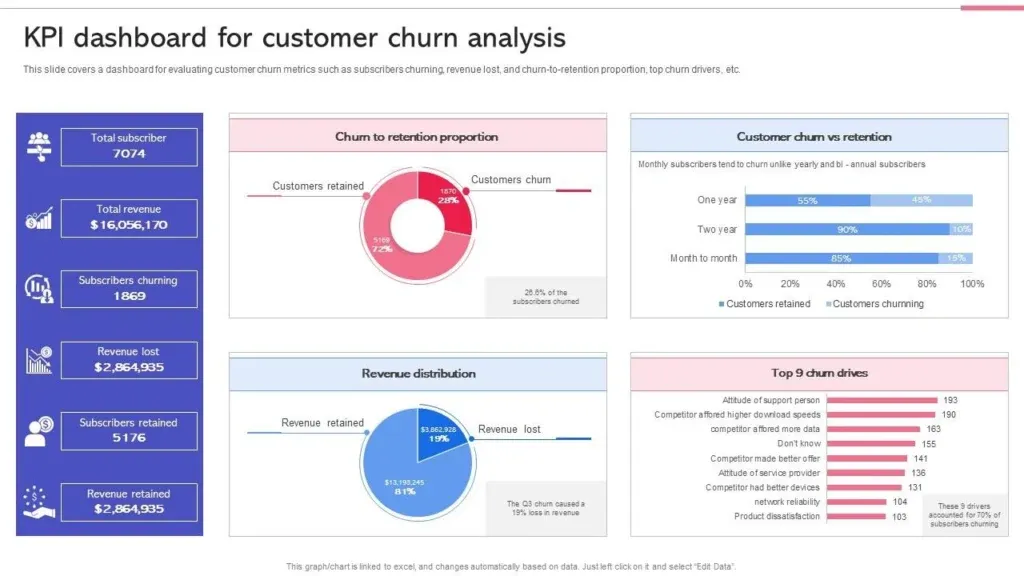
Image Source: SlideTeam
Your customers might show signs they’re unhappy with your pricing long before they leave. These warning signs usually appear 30-90 days before customer dissatisfaction with your pricing structure leads to cancelation. You can save at-risk accounts by spotting and fixing these pricing issues early.
1. Drop in Feature Usage vs Plan Cost
Users who cut back on product usage while staying on the same price plan end up paying more for less value. This reduced engagement points to future cancelations. Research shows that nothing predicts customer exits better than declining use of success-related features. Your team should watch usage-to-cost ratios closely - steady drops mean customers doubt your product’s worth.
2. High Downgrade Requests Before Renewal
Customers who switch to cheaper plans show less commitment to your product. This behavior raises red flags - they’re either scaling back feature use or cutting expenses. The data shows that plan downgrades often lead to complete exits, as customers test lower tiers before leaving. Each downgrade request gives you a chance to reset their value expectations rather than just accepting lower revenue.
3. Low Adoption of Premium Features
Customers waste money when they don’t use the premium features in their plan. Analysis reveals that users who downgrade their plans rarely used their previous tier’s advanced features. This shows they had more than they needed and are now picking the right size plan. Tracking how often customers use features at each tier level helps spot risky accounts before they downgrade or leave.
4. Frequent Plan Switches Within 90 Days
Users who jump between plans might struggle to find their fit or question your product’s long-term value. This behavior shows they’re confused about which features match which price points. Every plan change makes customers rethink their investment, leaving them open to competitor offers.
5. Negative Feedback on Price-to-Value Ratio
Customer complaints about pricing are clear warning signs that often go unnoticed. Voluntary churn stays around 7% for subscription businesses, and 44% of customers leave because they can’t reach their goals. Watch for comments like “too expensive for what I get” - they show your price and value no longer match.
6. High Refund or Credit Requests
Payment disputes and refund demands point to pricing problems. Research proves that failed payments are the strongest warning sign of churn. These might look like money issues at first, but they often reveal deeper value perception problems. Customers asking for credits or refunds already think your service costs more than it’s worth.
7. Inactivity After Price Increase
User behavior after price changes reveals much about value perception and price sensitivity. Studies show that during inflation, 7-8% price hikes are normal, but anything above 10% faces strong pushback unless your value proposition stands out. Watch engagement metrics after price changes - dropping activity within 30 days signals high risk of leaving.
8. Resistance to Annual Commitments
Users who hesitate to sign yearly contracts often doubt your long-term value. Research confirms that companies with longer contracts see 30-50% lower customer loss. This hesitation comes from uncertainty about consistent value delivery. Monthly billing makes it easier for customers to leave and leads to higher exit rates.
How to Track Pricing Signals Using Customer Data
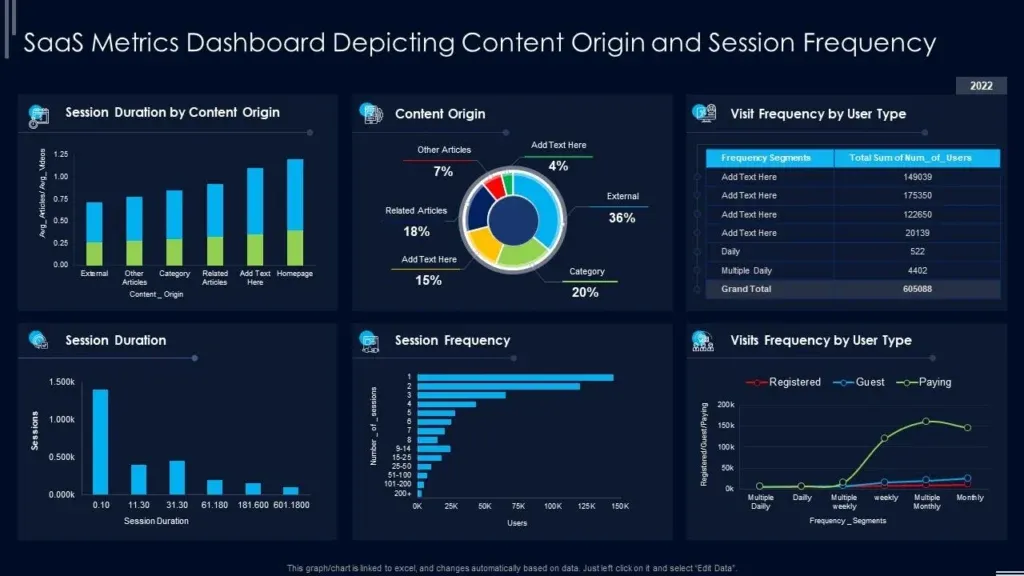
Image Source: PowerPoint Templates
The right tracking infrastructure helps you spot value perception problems before customers churn. You need to collect and analyze data systematically from multiple customer touchpoints.
Using product usage logs to detect value gaps
Product usage logs work like early warning systems that show potential gaps between your pricing and what customers expect. Your customers might not see enough value in what you offer. This shows up first as a big drop in feature usage that lasts over time. The disconnect between cost and perceived value usually happens 30-90 days before cancelation, which gives you time to step in.
Here’s how to track usage effectively:
-
Look at how different pricing tiers adopt features
-
See how usage changes after you adjust prices
-
Find customers who use your product differently than their plan suggests
A team might suddenly stop using a key feature or their data use might drop sharply. This shows they’re pulling away from your product. You should look into this right away since it’s often the first sign that customers aren’t happy with your pricing.
Integrating billing data with churn analytics
Billing data shows what happens while product engagement reveals why it happens. Looking at both these datasets together gives you a complete picture of customer health. You’ll notice complex patterns that single data points might miss.
These combined signals tell powerful stories:
Customers who fail payments and rarely log in have likely given up on your product. When customers downgrade their plan and barely use premium features, it means they had more than they needed and are now choosing a better fit. These insights only come from looking at all your data together.
Churn analysis reveals why customers leave throughout their journey with you. The patterns show common reasons like price sensitivity or poor product adoption. This helps predict which customers might leave so you can help them quickly.
Tracking support tickets for pricing complaints
Support tickets give you real feedback about pricing issues that numbers alone won’t show. A good ticketing system captures and handles every customer request quickly.
Track price-related feedback this way:
-
Watch for price-related keywords in tickets
-
Group tickets by pricing issues (value perception, feature-to-price ratio)
-
Watch how ticket numbers change after price updates
-
Set up alerts for patterns in pricing complaints
When support tickets increase while usage drops, you have a serious problem. Your customers feel stuck and don’t see value for their money. They’re likely to leave soon.
About 78% of service agents find it hard to balance speed and quality when helping customers. A good ticketing system helps you avoid searching through old tickets or passing problems around your team. Quick solutions keep customers loyal.
Your service agents often lack customer context - about 33% report this problem. Connecting support data with usage and billing information gives agents everything they need. This helps turn unhappy customers into loyal ones by addressing pricing concerns the right way.
Segmenting Customers by Pricing Sensitivity
Price sensitivity-based customer segmentation changes the way you spot and handle churn risks. You can learn about customers who might cancel by grouping them based on their reactions to pricing.
Usage and spend patterns tell the real story
Looking at how customers use your product and their spending habits reveals their price sensitivity levels. This helps sort customers into clear groups based on their buying habits, product usage, and how they react to price changes.
The best way to segment customers by price sensitivity has these groups:
-
Heavy users – These customers use your product a lot and are your most valuable segment. They make up about 20% of customers but generate 80% of total health care spending in similar models. You need to keep these power users happy since they’re vital to your revenue.
-
Medium users – This “rising risk” group shows up-and-down usage patterns. They might use your product only during specific events or times. These customers tend to be more sensitive about price when it’s time to renew.
-
Light users – These customers rarely use your product compared to others. Throughout their time with you, they don’t see much value in what you offer, which makes them likely to leave when prices change.
Usage patterns tell you which customers think your product is worth the cost. To cite an instance, watching how people use your product after a price change shows you their limits – customers who cut back usage after small price increases are very price-sensitive.
Finding high-risk groups by plan type
You can spot which customer groups might leave by looking at their plan behavior. Research shows that grouping customers by how much they use your product helps you find high-risk customers who need extra attention.
Watching how customers switch between plans can also reveal who might leave. Customers who keep changing plans, especially to cheaper ones, probably aren’t sure your product is worth it. This often means they’ll end up canceling.
Here’s a practical way to group customers by risk:
-
Highly complex (5% of population) – These customers need the most and are usually very sensitive to price versus value.
-
High-risk (about 20% of customers) – These customers show several warning signs and will become highly complex without help.
-
Rising-risk – These customers bounce between stable and unstable usage and start showing price sensitivity.
-
Low-risk – These steady customers have minor issues you can fix easily.
Brand loyalty gives you another way to look at things by measuring how much customers care about your brand. This helps you tell the difference between first-time buyers, repeat customers, and loyal members, so you can spot who might leave based on their commitment.
Companies that use price sensitivity to segment customers sell up to 85% more than their competitors. You can boost profits and keep more customers by matching your pricing to what each group values most. This smart grouping lets you fix problems before customers cancel, which protects your revenue.
Using Value-Based Pricing to Reduce Churn
Value-based pricing helps companies keep their customers longer by changing how customers see and assess their offering. Price Intelligently’s research shows that companies using value-based pricing strategies have 30% lower churn rates compared to those using cost-plus or competitor-based pricing models. This strategy tackles a major reason why customers leave by making sure they get their money’s worth.
Making prices match customer results
The price points reflect what customers actually achieve with your product or service. This creates a pricing structure where customers pay based on results instead of features or time spent. The focus moves from cost to return on investment, which makes renewal decisions easier.
A successful rollout needs:
-
Clear value measurement: Define specific metrics that show your product’s effect on customer success
-
Outcome documentation: Track and share customer results systematically
-
Value-driven segmentation: Create pricing tiers based on different outcome levels rather than random feature sets
You become a partner in your customers’ success, not just another vendor. Customers think your pricing is fair even when it costs more than competitors because they can link the cost to real benefits. A Gartner study reveals that 81% of buyers make purchasing decisions based on perceived value rather than price alone. This shows how value alignment matters more than actual cost when customers decide to stay.
Case study: Slack’s active-user billing model
Slack’s “Fair Billing” policy shows one of the best ways to use value-based pricing to keep customers. Every night, Slack checks all accounts and gives back money for inactive users. This ensures customers pay only for people who actually use the platform.
The results were impressive. Slack reached a 143% net dollar retention rate in 2019. This means existing customers spent more over time even though they could have reduced their costs.
Slack’s successful model works because of:
-
Automated value monitoring: Their system spots users who haven’t logged in for 14 days
-
Proactive refunding: Slack gives credits without waiting for customers to ask
-
Value-based conversion triggers: Smart in-app messages appear after users make Slack part of their daily work
Kelly Watkins, former VP of Marketing at Slack, said: “When you create pricing that feels fair to the customer, you remove a major objection from the buying process. Our customers know they’re only paying for what they use”. This honest approach builds trust and turns pricing from a reason to leave into a reason to stay.
Setting up value-based pricing takes work upfront to track analytics and customer results. However, the long-term benefits for keeping customers make it one of the best ways to reduce customer loss in today’s subscription economy.
Bundling and Packaging Strategies That Improve Retention
Product bundling is a powerful strategy that targets the psychological aspects of customer retention. Companies that combine multiple products or services into single packages tap into consumer psychology. This creates more value than individual items can provide on their own.
Creating perceived value through feature bundling
Smart bundling makes customers look beyond individual prices and see greater overall value. Research shows that companies with good bundle design can achieve up to 30% higher revenue growth compared to those using basic pricing methods. This works because customers don’t want to miss out on savings. They also appreciate having fewer decisions to make.
Good bundles give customers two key benefits: they save money and get more convenience. Studies show that 73% of consumers expect brands to know what they need and want. Smart bundling shows customers that brands understand them. Customers also tend to compare bundles with other bundles instead of looking at individual item prices. This changes how they see value completely.
Bundle design success shows up in real numbers. Well-designed bundles can increase average order value by up to 30% and boost customer loyalty by 25%. These numbers show how better value perception helps keep customers from leaving.
Reducing churn by increasing switching costs
Bundling creates real switching costs that keep customers around longer. The B2B SaaS world has changed a lot. Customers used to face big hurdles when switching from single, enterprise-wide platforms. Now, specialized SaaS solutions work separately, which makes switching much easier.
Smart companies curb this risk by creating bundles that become part of their customers’ workflows. To cite an instance, the 15 biggest B2B SaaS companies offer about 347 integrations. This makes their products essential parts of their customers’ tech systems. Your product becomes harder to replace once it’s part of daily operations.
Good bundling goes beyond tech integration. It includes extras like premium support and exclusive content. These features don’t cost much to provide but make a big difference. They improve brand loyalty and reduce customer loss by offering complete solutions for various customer needs.
Product bundling ended up creating what experts call “positive switching costs.” These aren’t artificial barriers but real benefits customers would lose by switching providers. This approach turns pricing from a possible reason to leave into a tool that keeps customers loyal.
When and How to Grandfather Pricing Without Losing Revenue
SaaS companies face a tough choice with grandfathering pricing as they try to balance customer happiness and revenue growth. This pricing model lets existing customers keep their original rates after new pricing rolls out for new clients. The practice affects churn rates when companies implement it properly.
Temporary vs permanent grandfathering
The duration of grandfathering plays a vital part in shaping both customer satisfaction and financial results. Temporary grandfathering gives customers limited-time price protection before moving them to current rates. Permanent grandfathering, however, keeps the legacy pricing forever.
Permanent grandfathering looks customer-friendly at first but creates major revenue issues as products grow. Companies can’t sustain permanently discounted rates for early adopters while operational costs rise and new features roll out. Most growing companies end up choosing hybrid models. These models give loyal customers long-term discounts but still allow occasional adjustments to match current value.
Here’s something unexpected: customers who pay much less than market value sometimes show higher churn rates because they see the product as low-value. This suggests that charging fair, modern prices—even after increases—can actually improve involvement and reduce reasons for churn.
Zoom’s approach to pricing transitions
Zoom’s pricing development shows how to handle grandfathering during rapid growth. Zoom chose not to raise prices on core offerings substantially, even with unprecedented demand. This careful approach protected their brand value and customer trust while preventing customers from leaving for competitors.
Rather than just raising prices, Zoom grew its product line to create new ways to earn. Their “land and expand” strategy brought in more revenue without pushing away existing customers—a key factor in keeping churn low during pricing changes.
Zoom’s strategy represents balanced grandfathering that worked well. They kept prices stable for existing customers while carefully adding premium features worth the extra cost. Their approach shows how pricing changes can turn increased demand into lasting business value without triggering too much churn.
Using Predictive Models to Act on Pricing Signals
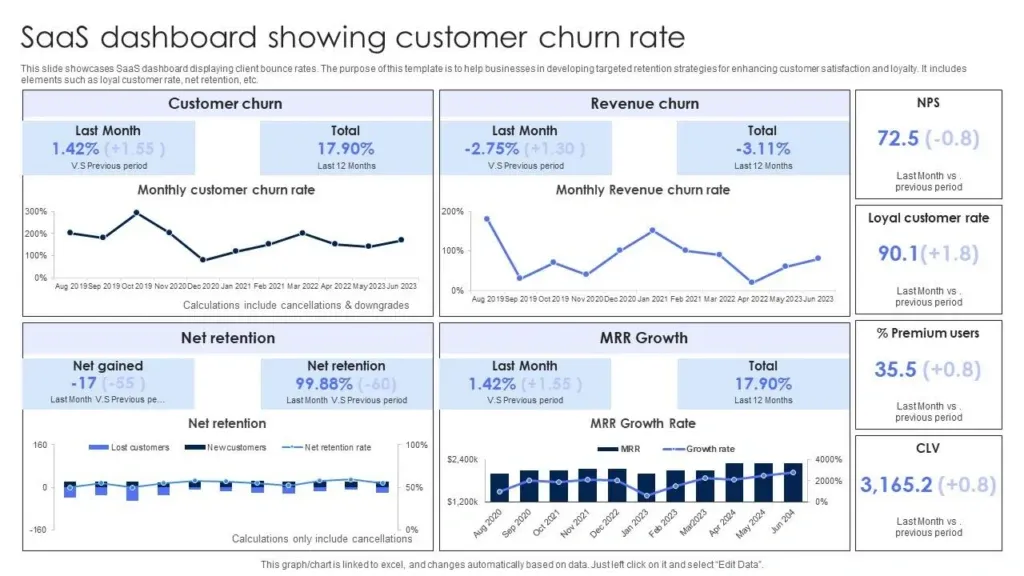
Image Source: SlideTeam
Predictive analytics has revolutionized how SaaS companies anticipate and alleviate customer churn. Companies that use predictive churn models see their churn rates drop by up to 30%. This happens because they spot at-risk accounts early enough to take action.
Building churn risk scores from pricing behavior
Risk profiles based on pricing signals need multiple data points to work effectively. These models look at:
-
Support ticket volume and frequency patterns
-
Sentiment trajectory over rolling time windows
-
Product usage metrics relative to pricing tier
-
Contract characteristics and renewal timing
-
Historical patterns from previously churned accounts
Advanced models turn these inputs into numeric churn probability scores on a 0-100% scale. These scores measure each customer’s likelihood of cancelation. This approach helps turn vague concerns into useful metrics that associate with customer retention outcomes.
Companies see returns up to 10x on their analytics investment when they use predictive churn analytics. We spotted high-value customers showing risk signals early. The economics make sense - predictive modeling stands out as one of the most economical solutions to reduce churn throughout the customer’s journey.
Triggering retention workflows based on thresholds
Risk scores lead to the next vital step - setting the right intervention thresholds. Systems automatically start targeted retention workflows when accounts cross these thresholds. Many companies split customers into risk tiers:
-
High Churn Risk: 76-100
-
Medium Churn Risk: 51-75
-
Low Churn Risk: 0-50
Each tier gets specific interventions. A customer who submits five support tickets in a month instead of their usual one per quarter triggers immediate retention protocols. This happens before they ask to cancel.
Real-life uses of these workflows include account scoring to prioritize outreach and automated retention campaigns. Customer success teams get alerts about high-value accounts showing warning signs. The system monitors customer health continuously to spot satisfaction patterns. These systems give teams a 30-90 day window between first warning signs and actual cancelation. Teams can address pricing concerns proactively during this time.
Conclusion
Strategic pricing is a powerful tool to reduce customer churn and propel development, yet many businesses don’t use it effectively. As I wrote in this piece, pricing signals can predict when customers might leave 30-90 days before they actually cancel. This knowledge gives you a crucial edge to step in while you can still keep the customer. The numbers back this up: companies that match their pricing to customer value see 30% less churn than those using standard pricing models.
Your pricing strategy needs to do more than generate revenue - it should help keep customers. This means watching the eight pricing signals we covered, from drops in usage to resistance to yearly commitments. These warning signs show up in your product usage logs and billing data, alerting you to gaps between price and perceived value.
Breaking down customers by how price-sensitive they are lets you help high-risk groups before they leave. Strong customer relationships grow through value-based pricing, smart bundling, and careful grandfathering policies that ensure clients get their money’s worth. Predictive analytics rounds out this approach by calculating risk and starting retention workflows at the right time.
Note that pricing affects your profits in two ways - through revenue and customer retention. Each percentage point of reduced churn protects significant profits. Subscribe to our newsletter for exclusive insights on pricing strategy optimization that most companies miss, including advanced tactics for using pricing signals to cut churn rates across different customer segments.
Quick action on pricing signals turns potential cancelations into chances for renewal. While others scramble to keep leaving customers with desperate discounts, you’ll prevent churn by matching value to price. This forward-thinking approach doesn’t just protect revenue - it creates lasting competitive advantages through better customer relationships and steady growth.