How AI Dynamic Pricing Actually Makes You More Money: Real Numbers Inside
Did you know companies now use algorithms to set prices and adjust them throughout the day? AI dynamic pricing has changed how businesses optimize revenue. These smart pricing strategies have become powerful tools to drive profits.
AI dynamic pricing algorithms use data from various sources - past product prices, production costs, market patterns, and customer buying habits. Your business can adjust prices instantly based on market demand, buyer behavior, and outside factors when you implement AI-powered pricing. This helps capture the highest possible revenue during peak times while keeping sales steady during slower periods.
Machine learning systems for pricing never stop learning. They analyze market data, buying patterns, competitor prices, and social media trends continuously. Unlike old fixed-price models, AI tools help you stay competitive and profitable. These systems also create individual-specific experiences that keep customers coming back.
This piece shows how AI dynamic pricing leads to better revenue with real numbers that prove its effect on different parts of your business. You’ll find practical steps to implement it and key ethical points to think about. A good pricing strategy should build customer trust, not break it.
What Makes AI Dynamic Pricing Different from Traditional Models
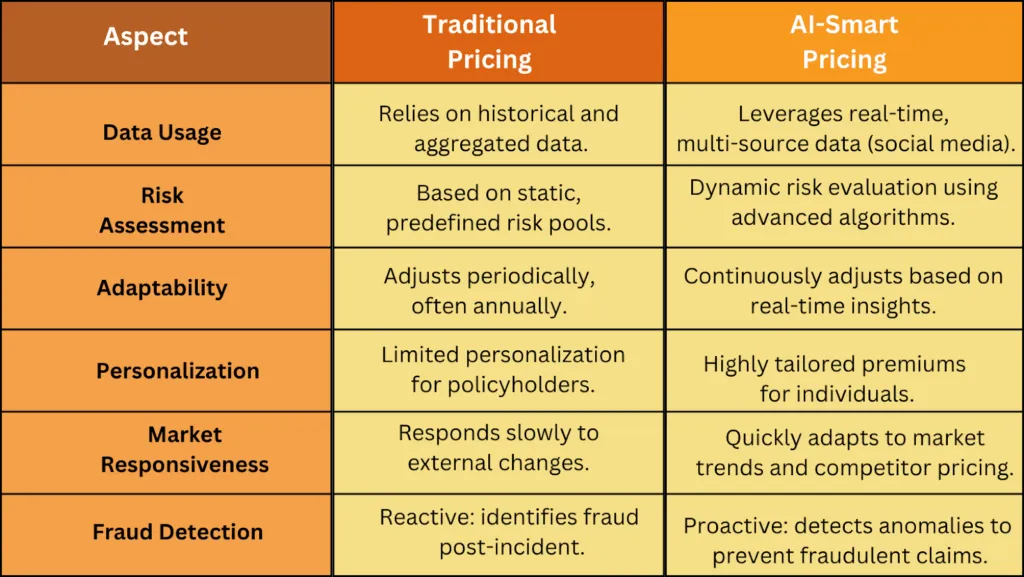
Image Source: Bacancy Technology
Traditional pricing approaches are becoming outdated faster than ever. Businesses still using static pricing models lag behind their competitors who use AI dynamic pricing strategies.
Real-time data inputs vs. static pricing assumptions
The main difference between AI-powered pricing and conventional methods shows in how they handle information. Traditional pricing models use static assumptions and historical data. They respond slowly to market changes. AI dynamic pricing systems, on the other hand, analyze both internal data (inventory levels, sales velocity) and external signals (weather, local events, holidays) to adjust prices right away. This immediate response helps businesses adapt to market changes instead of waiting for scheduled price reviews that happen once or twice a year.
AI pricing tools help retailers turn their desired competitiveness levels into actual price points. They track their key competitors’ prices to maintain an accurate, current view of their market position.
Machine learning dynamic pricing vs. rule-based systems
Rule-based pricing follows predefined instructions (like “if margin < x, then discount”) with limited or no forecasting abilities. These old systems aim to simplify things. They look at just one or two dimensions at a combined level because of tool and data limits.
Machine learning dynamic pricing systems learn from market data, consumer purchasing patterns, and competitor pricing to predict demand under different scenarios. This rise from the “Uniform Game” (offering standardized prices to balance volume and margin) to the “Dynamic Game” (setting prices by looking at multiple dimensions at once) gives AI-powered businesses a big advantage.
Companies that use AI-driven pricing see efficiency rates of up to 85-90%. This is a big deal as it means that they perform better than traditional methods’ 60-70% efficiency.
Customer segmentation using AI pricing tools
The sort of thing I love about AI is how it enables precise customer segmentation beyond simple demographics. Traditional approaches get about 60% accuracy using static characteristics. AI methods reach up to 85% precision through immediate behavioral analysis.
Machine learning models group customers based on complex factors like purchasing history, browsing patterns, and psychographic characteristics. This detailed understanding lets businesses use hyper-targeted personalization. Prices adjust based on individual customer behaviors and priorities—resulting in 20-25% higher marketing ROI.
8 Ways AI Dynamic Pricing Increases Revenue (With Real Numbers)
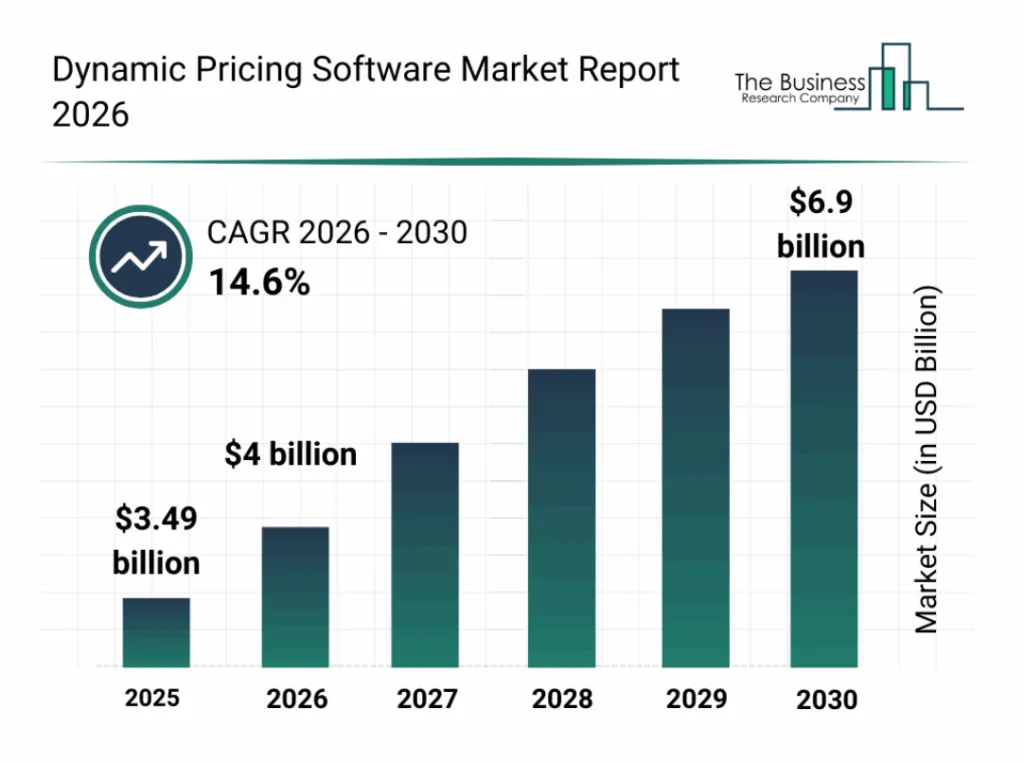
Image Source: The Business Research Company
Numbers tell the truth about AI dynamic pricing. The figures clearly show how it affects your bottom line. Let’s look at how this technology brings measurable revenue growth in key business areas:
1. 15% Revenue Uplift from Live Price Adjustments
AI pricing systems check market conditions and adjust prices in seconds, unlike teams that update weekly or monthly. Amazon adjusts product prices every 10 minutes—144 times each day—and sees 25% more profit. The San Francisco Giants baseball team made an extra $500,000 in just one year by using live pricing that responds to market changes.
2. 20% Margin Growth via Inventory-Aware Pricing
Smart pricing systems link stock levels with expected demand and apply discounts only as needed. This helps protect margins on popular items while selling slower-moving products faster. Studies show AI-powered pricing strategies boost profitability by 22%. These strategies quickly affect contribution margins by adapting to changing costs and demand.
3. 12% Higher Conversion Rates from Individual-specific Offers
AI creates prices based on each customer’s purchase history and browsing patterns. This individual approach works well—85% of online shoppers buy more from brands that give them personal discounts. A retailer that tried personal discounts during Black Friday saw 12% more revenue and 9% better margins.
4. 18% Boost in Repeat Purchases through Behavioral Pricing
Personal pricing makes customers come back. Research shows customers who get personalized prices are 25% more likely to buy again. This works especially well with high-income and younger buyers. A fashion retailer used AI-driven behavioral pricing and saw 18% better sell-through rates and 9% higher margins.
5. 25% Faster Sell-Through on Overstocked Items
AI pricing systems help clear extra stock without huge discounts. One retailer used AI pricing and improved margins by 15% while selling 30% more inventory. Smart markdowns predict the best timing and size of price cuts before demand drops, which means fewer panic discounts and better profits.
6. 10% Reduction in Cart Abandonment with Dynamic Discounts
Cart abandonment sits at 72%, so dynamic discounting is a great way to boost sales. Studies show 87% of shoppers say discounts would stop them from abandoning their carts. Automatic checkout discounts help reduce abandonment and increase average order size.
7. 30% More Competitive Pricing via Competitor Monitoring
AI price tracking watches competitors all day and night, letting you know about price changes right away. Companies using competitor price monitoring see 20% better profit margins. AI looks at thousands of prices quickly and spots strategy changes faster than manual checking.
8. 22% Increase in Average Order Value from Bundled Pricing
Smart bundling uses AI to create product packages that match customer behavior and stock levels. This helps increase average order value substantially. A national retailer tried these strategies and improved margins by 4% while keeping sales steady. Subscribe to our latest pricing insights to stay updated on AI pricing trends and strategies.
How to Implement AI-Powered Dynamic Pricing in Your Business
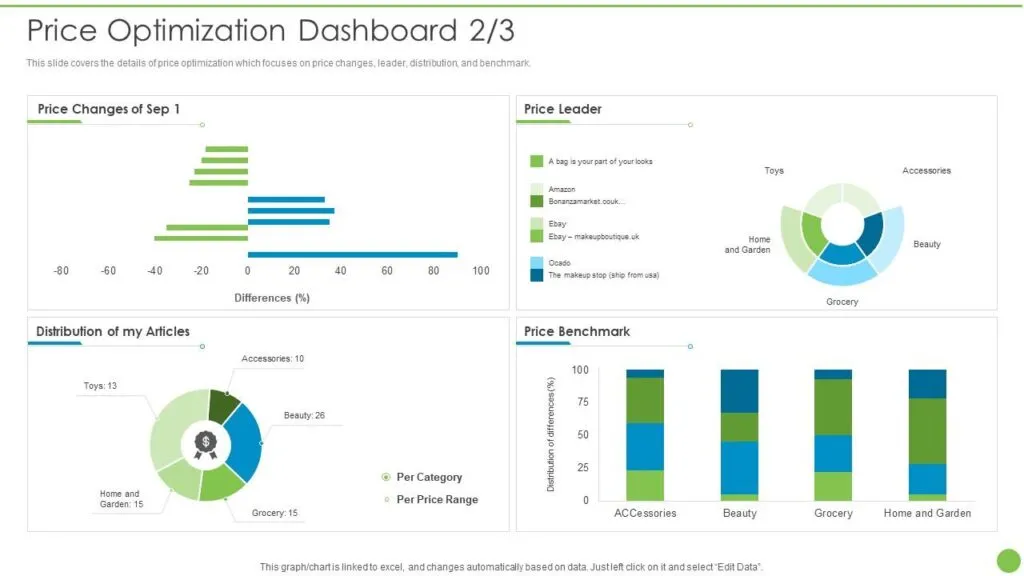
Image Source: SlideTeam
AI dynamic pricing needs careful planning and technical groundwork. Your business goals should guide your first steps.
Define pricing goals: revenue, margin, or market share
Your main goal could be growing revenue, maximizing profits, or staying competitive. Research shows companies that use analytical pricing guidance win more deals than they lose at a 12% higher rate than others. Sales teams with dynamic data guidance feel twice as confident about getting price increases.
Review data readiness and clean historical datasets
Good data quality determines success. You should audit usage patterns, map AI costs, and learn about customer price preferences through surveys. Take our free pricing audit to assess your business’s readiness for AI dynamic pricing implementation. Problems with data quality can cause major revenue losses, so investing in data integrity matters.
Choose between off-the-shelf vs. custom AI pricing tools
Off-the-shelf solutions are affordable (up to $40,000/year) and quick to deploy, while custom solutions provide specialized algorithms that match industry-specific data. Small businesses do better with subscription-based tools, and larger enterprises might benefit from custom development.
Combine smoothly with ERP, CRM, and e-commerce platforms
A unified platform connects customer-facing and operational processes. Sales teams can check inventory levels instantly while finance teams predict demand based on customer patterns.
Run A/B tests and refine pricing algorithms
Test different pricing approaches on similar customer groups before full rollout. Measure generated revenue instead of conversion rates to find the best pricing. Smart teams analyze test results thoroughly to understand what the numbers mean.
Challenges and Ethical Considerations in AI Pricing
AI dynamic pricing can boost revenue but comes with major ethical challenges that need careful consideration.
Customer trust and perception of fairness
Customer relationships depend on trust. Companies that use AI ethically gain more customer trust, with 85% of customers showing higher trust levels. Notwithstanding that, customers want clear pricing information. Amazon has faced criticism from customers who questioned their pricing methods’ fairness. The COVID-19 crisis led to accusations of price gouging as essential item prices shot up.
Regulatory compliance in price-sensitive industries
Regulators now watch AI pricing more closely. The EU’s AI Act sets strict risk categories with heavy penalties - up to €35 million or 7% of global annual revenue for major violations. Companies must also follow privacy rules like GDPR and CCPA. Businesses that operate in multiple countries face extra challenges with different legal requirements.
Bias in training data and algorithmic transparency
AI algorithms can accidentally reinforce social biases and create unfair prices for certain groups. Biased training data leads to biased AI pricing models. This happened in real life when Princeton Review’s pricing system charged higher prices to Asian-Americans for online tutoring.
Cost of implementation and ROI timeline
AI costs go beyond just buying software licenses. You need a resilient infrastructure, expert staff, and proper system integration. Computing costs often rise unexpectedly as AI grows. Smart companies test small pilot projects first before expanding, which helps balance efficiency gains against setup costs.
Conclusion
AI dynamic pricing leads modern business strategy and revolutionizes revenue optimization. AI-powered pricing systems beat traditional models with up-to-the-minute data processing, machine learning capabilities, and smart customer segmentation.
Numbers tell the success story of AI pricing clearly. Companies see 15% revenue growth from instant price adjustments. Inventory-aware pricing brings 20% higher margins. Customized offers drive 12% better conversion rates. Businesses also report 18% more customers coming back, 25% faster inventory movement, and 10% fewer abandoned shopping carts after using these systems.
Your business needs clear pricing goals before jumping into implementation. You might want more revenue, better margins, or a bigger market share. Quality data makes all the difference, so you should prepare your historical information carefully. Success depends on proper system integration and thorough testing, whether you buy ready-made solutions or build custom ones.
Financial gains matter, but ethical considerations deserve equal weight. Your customers’ trust depends on fair and open pricing practices. You must watch regulatory rules closely, especially across different regions. AI bias poses real risks, so you need to examine your training data carefully.
The pricing revolution has arrived with solid financial proof to back it up. Smart companies use these AI systems while staying ethical to gain an edge over competitors. Your pricing strategy becomes more than just a way to make money - it turns into a smart business tool that responds to market changes while keeping your customers’ trust.