
How Leading Brands Use Competitive Price Intelligence to Stay Ahead
Your competitors adjust their prices hourly using dynamic pricing tools. Competitive price intelligence has become essential to remain competitive in today’s market. Continuous monitoring of competitor prices is no longer optional—it’s an absolute necessity to survive in highly competitive markets. Businesses that have transitioned to AI-powered pricing solutions have increased gross profit by 5% to 10% while boosting revenue sustainably. Pricing artificial intelligence automates monitoring efforts. Competitive pricing tools track competitor prices live. AI price optimization revolutionizes market complexity into a chance. This piece explores how leading brands utilize these technologies to respond faster and protect margins while strengthening market positioning.
Why Traditional Price Tracking Falls Short for Leading Brands
Most retailers still rely on spreadsheets and manual checks to monitor competitor prices, but this approach creates serious problems. Price wars have become fierce in multiple sectors, particularly electronics and home markets where prices change constantly. Your team cannot update this data daily when handling it manually.
Manual monitoring can’t keep pace with market changes
Price dynamism in competitive markets just needs immediate responses. Manual data collection achieves 70-80% accuracy at best. That 20% inaccuracy rate means 1 in 5 pricing decisions gets made on bad data. You’re looking at 200 potentially incorrect prices at any given time for a catalog of 1,000 SKUs. This affects margins and customer trust.
Competitors adjust their pricing multiple times throughout the day. Your category managers find a competitor dropped prices Sunday evening, but it’s Wednesday by the time they do. The conversion chances are gone.
Delayed data leads to missed chances
Stale information forces your business into reactive mode rather than strategic positioning. You miss promotional windows and fail to capitalize on competitor pricing gaps without immediate visibility into market movements. Price drops and limited-time promotions slip through with manual tracking. An e-commerce business that fails to adjust pricing strategy in the moment loses market share to more agile competitors.
Limited scalability in product catalogs
Tracking even 500 products across five major competitors means monitoring 2,500 data points. Scale that to enterprise catalogs and the workflow becomes impossible. Manual monitoring across 10,000 SKUs requires 333 hours weekly in labor alone. Most teams can track a minimum of 500 references daily when working at full capacity. This leaves 80% of your catalog unmonitored.
High labor costs and resource needs
The financial burden extends beyond obvious salary expenses. Manual price monitoring for 10,000 SKUs costs $866,000 in direct labor annually. Your senior category managers spend 15-20 hours weekly on price research instead of strategic merchandising and vendor negotiations. That productivity loss compounds when you think about the cost of having skilled employees update spreadsheets rather than build revenue-generating initiatives.
How AI-Powered Competitive Price Intelligence Works
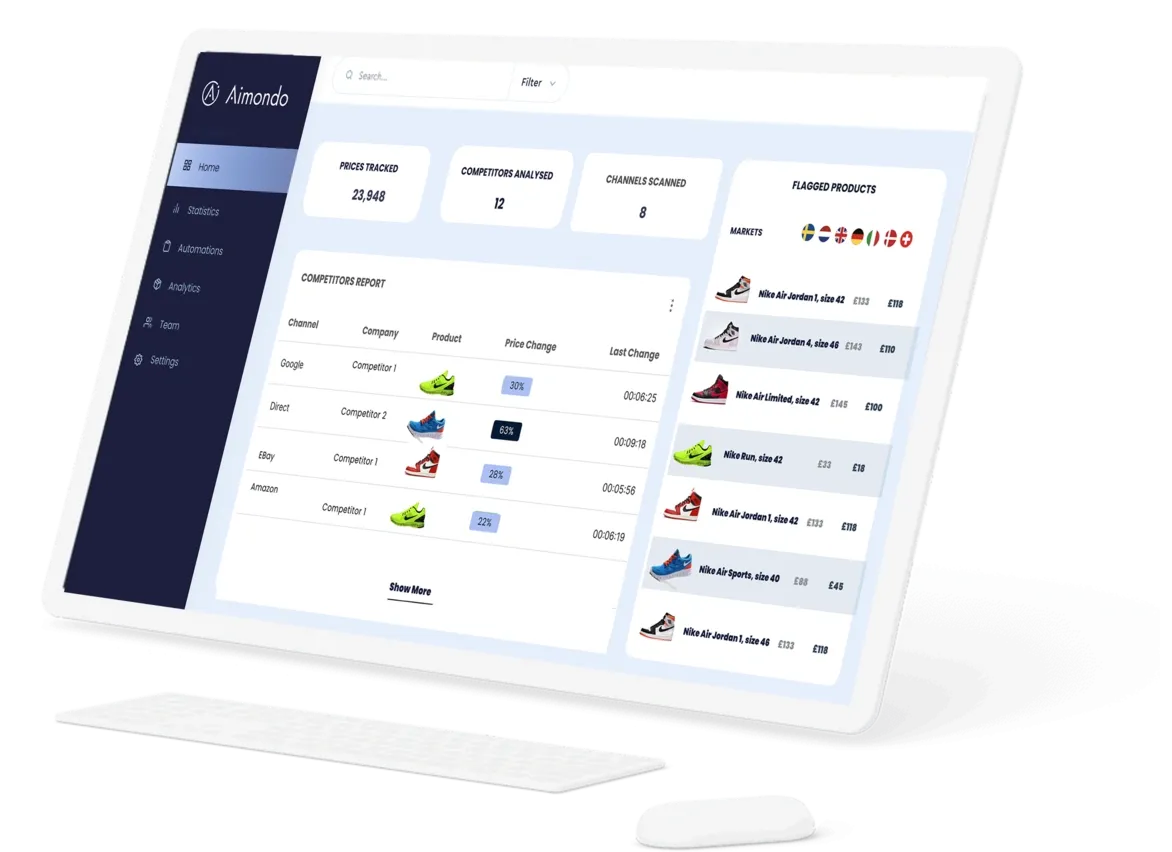
Image Source: Aimondo
“Data-driven pricing is essential in the digital age.” — Marc Benioff, CEO of Salesforce, leader in cloud computing and data-driven business strategies
AI-powered competitive pricing tools change how you track competitor prices through automation and machine learning algorithms. These systems replace guesswork with analytical precision across your whole pricing strategy.
Live data collection from competitor websites
Pricing artificial intelligence monitors competitor websites without human intervention. Advanced platforms achieve a 10-second data refresh rate and detect price changes the moment competitors adjust their listings. Your system scans thousands of product pages across multiple regions and currencies. It captures flash discounts and promotional changes right away. Price updates process in less than 15 minutes. You can respond before market conditions move.
Automated price matching and product comparison
AI-driven matching engines identify similar SKUs across different catalogs. The technology tracks products and their attributes including price, description, color, style and material. Algorithmic matching eliminates manual product searches while maintaining accuracy rates above 99% for informed decision-making. Stock availability monitoring prevents errors from competitors listing out-of-stock items at misleading prices.
Dynamic pricing engines and repricing automation
Modern repricing software adjusts your product prices within seconds of competitor activity. You establish business rules that define when to match, undercut or maintain premium positioning. Floor price enforcement prevents margin erosion during aggressive competition. Automated systems handle pricing for hundreds or thousands of SKUs at once and apply different strategies per product category based on your profitability thresholds.
Predictive analytics for future price trends
Machine learning models forecast optimal prices by analyzing historical data, seasonal patterns and competitor behavior. These systems simulate potential market scenarios and predict outcomes from different pricing strategies. The algorithms learn from each iteration and continuously improve forecasts while adapting to evolving market conditions.
Integration with inventory and sales data
AI-powered tools connect pricing intelligence with inventory optimization and treat them as unified functions. The system recommends targeted pricing strategies to clear stock before it becomes a margin problem when excess inventory builds up. This integration pulls signals from sales history, market trends and external events for faster demand detection.
Key Benefits Leading Brands Gain from AI Price Tracking
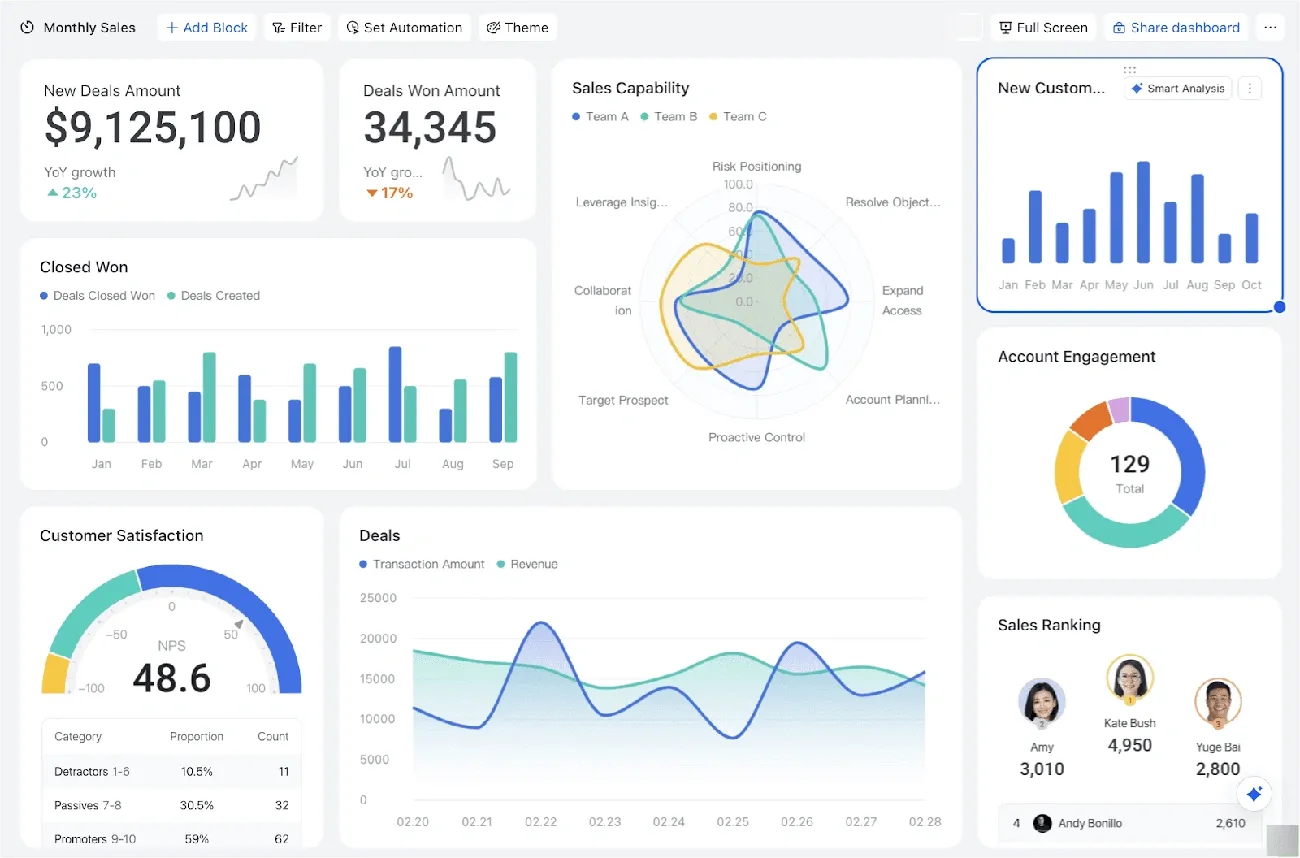
Image Source: Lark
Brands using AI-powered pricing systems gain measurable competitive advantages that affect revenue and profitability. The benefits extend beyond simple automation to fundamental shifts in how you compete.
Faster response to competitor price changes
AI price optimization watches competitors 24/7 and detects price adjustments the second they occur. Your system alerts you when competitors tweak pricing and scans thousands of product pages across regions to catch flash discounts the moment they go live. Speed like this eliminates the lag time that costs sales and market share.
Improved profit margins through optimized pricing
Retailers implementing AI-powered solutions increase gross profit by 5% to 10% and boost revenue at the same time. One grocery chain found that there was prices sitting 20% to 30% below competitors, then adjusted to position just below their main rival and improved margins with almost no effect on unit volume. Amazon increased profits by 25% using these same approaches. Organizations adopting competitive pricing tools report margin increases of 5% to 10% and sales growth of 2% to 5%.
Join our inner circle of AI innovators—subscribe to our newsletter for weekly profit-focused insights and exclusive market shifts delivered straight to your inbox.
Better market positioning and customer value perception
Competitor price tracking will give an accurate view of your market position, then enable you to translate competitive strategy into actual price points. This evidence-based approach improves customer value perception and keeps profitability intact. Your brand positions itself based on strategy rather than reaction.
Implementing Competitive Price Intelligence in Your Business
“The single most important decision in evaluating a business is pricing power.” — Warren Buffett, CEO of Berkshire Hathaway, legendary investor emphasizing pricing strategy
Successful implementation starts when you arrange technology and business goals together. Companies with defined competitive intelligence goals are 2.2x more likely to outperform their market peers.
Define your pricing objectives and strategy
Get clear on what you want to achieve. Revenue management, profit margin optimization, customer segmentation, loyalty building, or market share expansion. Arrange your prices with how you want the market to see you. A premium brand shouldn’t position itself like a discount retailer. Your objectives shape everything from which competitors deserve attention to how often you need fresh data.
Choose the right AI price optimization tool
Strategic fit matters more than flashy features when you select pricing artificial intelligence solutions. Review platforms based on accuracy in producing profitable prices and data integration capabilities that merge internal and external sources. Look for automation that gives your team the ability to work better, portfolio optimization across broad categories, transparency in pricing decisions, and speed in delivering results. Organizations that use automated competitive pricing tools respond to market changes 68% faster than those that rely on manual methods.
Train your team on new pricing workflows
Break down silos between marketing, merchandising, and pricing teams. Your AI pricing algorithm works best when departments pull in the same direction. Invest in ongoing training on tools and frameworks as pricing evolves. Explainability becomes critical here. Black-box models create resistance among sales, finance, and leadership teams.
Monitor performance and adjust based on insights
Track pricing KPIs daily rather than treat them as periodic reviews. Monitor profit margins, price elasticity, revenue growth rates, and competitor price comparisons. A 1% improvement in pricing delivers an average 11% increase in profits when you use competitive intelligence. Organizations that adopt AI-powered solutions report up to 70% reduction in manual pricing effort. This frees teams to focus on strategy refinement rather than administrative tasks.
Conclusion
Competitive price intelligence has become a survival requirement for modern brands, not just a nice-to-have advantage. AI-powered pricing tools deliver measurable results with 5-10% profit increases and free your team from manual spreadsheet work. Speed matters in ever-changing markets. Automated systems respond 68% faster than traditional methods. Subscribe to our newsletter and join our inner circle of AI innovators for weekly profit-focused insights and exclusive market changes. Your competitors are using these tools. The real question isn’t whether to adopt AI pricing intelligence but how quickly you can implement it.