
How Small Businesses Doubled Profits: Artificial Intelligence Case Studies2025
AI-powered automation helps businesses increase efficiency by up to 40%, giving small businesses a competitive edge. Recent studies show that 35% of businesses use AI “significantly” today, compared to 22% in 2021 - a 64% rise in adoption.
Small businesses of all types now employ AI tools to reshape their operations and improve their profits. AI-powered recommendation engines helped e-commerce retailers boost sales conversion rates by 30%. Local dental clinics cut down appointment no-shows by 40%. Restaurants that use AI-based inventory tracking reduced their waste by 25%. Other businesses saw a 15% drop in customer losses within six months.
These ground examples show how AI works in different business sectors. You might want to know about AI solution pricing or how AI can propel your small business’s development. Eight powerful case studies demonstrate how small businesses doubled their profits by
implementing AI strategically.
How AI is Changing Small Business Operations

Image Source: LYFE AI
Small businesses nationwide now know that AI isn’t just for tech giants. Recent data shows about half of small businesses already use AI, and this number will grow faster in the coming years. This transformation changes small enterprises’ operations in three key ways.
Automation of repetitive tasks
Business owners who embrace AI say goodbye to daily administrative work. The numbers tell the story - 78% of businesses use automation to cut down manual tasks. Many save up to 15 hours each week by letting AI handle routine work. That’s almost two full workdays back in their hands.
These businesses automate a wide range of tasks. From scheduling meetings and managing emails to processing invoices and entering data. Microsoft’s Copilot helps with Excel formulas, creates visualizations, and identifies business trends. The tool designs PowerPoint slides and summarizes Teams conversations with automatic action points.
The accuracy rates stand out too. AI reduces human errors in bookkeeping and data entry significantly. QuickBooks now handles invoicing and payments automatically. The software answers accounting questions and provides cash flow insights in plain language.
Real-time data analysis for decision-making
Old-school data analysis looks at past information, which leads to delayed decisions based on old data. AI changes everything by analyzing live data streams. Business leaders get immediate insights to make better decisions on the spot.
Take inventory management as an example. AI watches stock levels and shipment status in real-time. Managers can quickly decide about restocking or changing shipment routes to avoid delays. Customer service teams use AI to analyze feedback right away. They see satisfaction levels and sentiment patterns immediately.
The benefits speak for themselves. AI pioneers in HR departments - 54% of them - report clear strategic advantages in their operations. Small businesses use AI analytics to make smarter choices about inventory, marketing, and resources.
AI tools becoming more affordable and available
The best news? AI has become much more available to businesses of all sizes. Cloud solutions keep costs down while offering powerful AI tools that grow with your business. Low-code and no-code platforms make a big difference. Business owners can now integrate AI without deep technical knowledge.
More businesses adopt AI every day:
-
Small business AI adoption jumped from 24.5% in 2020 to 29.5% in 2021
-
Today, 40% of small businesses use generative AI tools and grow because of it
-
Accessible interfaces make AI easy for non-technical users
A small business owner puts it well: “Every single project is its own business and really requires a magnified approach toward accounting and maximizing efficiencies.” AI helps her understand cost impacts on profits and make better supply chain decisions.
The AI revolution welcomes businesses of all sizes. Small business owners who use these tools today prepare themselves to compete, grow, and succeed in our digital world.
Key Areas Where AI Boosted Profits
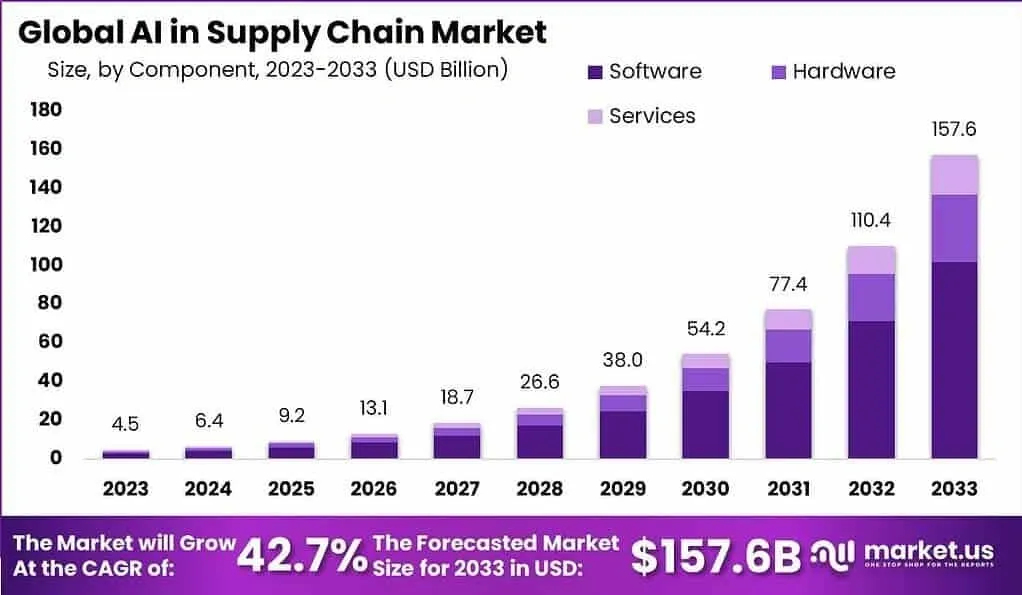
Image Source: Market.us
AI implementation changes how businesses make money across their core operations. Small businesses see better financial results in four key areas when they use AI the right way. Want to know how AI could help your business make more money? Let’s get into where companies see the biggest returns.
Customer service automation
Small businesses have found that AI-powered customer service does more than just save money—it helps bring in more revenue. AI chatbots answer customer questions instantly at any time, which cuts wait times and makes customers happier. Companies that use AI tools in customer service keep more customers because their support becomes faster and more tailored.
The money benefits are clear. AI customer service cuts costs by handling routine tasks automatically, so support teams can help more customers with less work. This helps small business owners use their resources better and work on growing their business. AI can also spot patterns in customer messages, pull key details from emails, and organize vital information—which saves countless hours of manual work.
AI-driven marketing personalization
Tailored marketing isn’t optional anymore—71% of customers expect it, and 76% get frustrated without it. AI makes this personalization possible at a large scale. Its advanced algorithms process customer data, both past and present, to learn what makes people buy.
To cite an instance, AI looks at browsing history to suggest products that fit each customer, which helps solve the problem of too many choices on online stores. It also lets businesses target promotions to specific customer groups, which leads to 1-2% more sales and 1-3% better profit margins.
Inventory and supply chain optimization
Your inventory management directly affects your profits. AI inventory systems help businesses keep just the right amount of stock by predicting demand accurately. Walmart has cut out-of-stock items by 30% and reduced extra inventory by 25% using these AI systems.
AI gets these results by:
-
Looking at past sales, seasons, and other factors to predict future needs
-
Making warehouse layouts and picking routes more efficient
-
Tracking deliveries in real time and predicting arrival times
Want to see how AI could cut your business costs? Get the free pricing calculator when you subscribe to see potential savings and ROI from using AI in your business.
AI in financial forecasting and accounting
AI is changing how businesses handle their finances. This year, 58% of finance teams are trying AI tools—up from 37% last year. These systems look at huge amounts of financial data to make accurate predictions, which helps businesses plan ahead instead of just reacting.
AI financial tools process past trends and current data to make predictions that update as new information comes in. Businesses don’t have to wait for scheduled updates to change their financial plans. AI can also run many “what-if” scenarios at once, looking at hundreds of factors that affect revenue across different streams to help allocate resources better.
8 Real-World Case Studies of AI Success
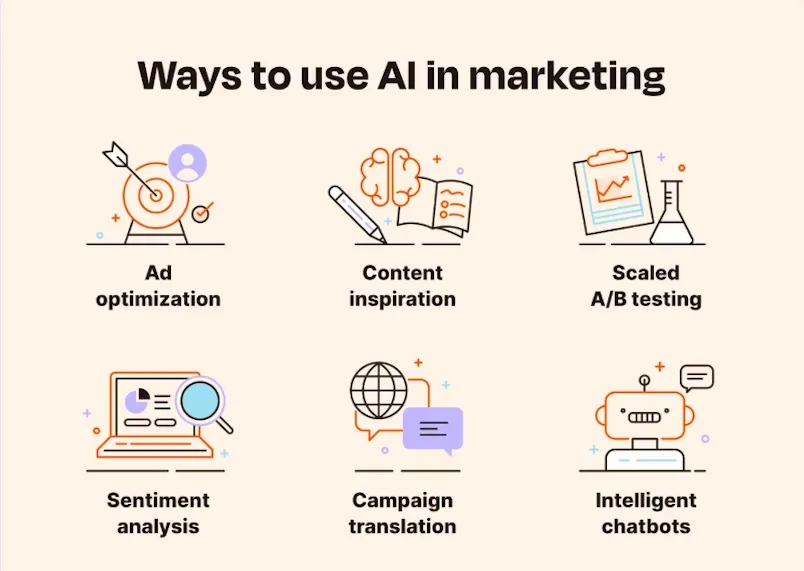
Image Source: Adam Fard UX Studio
Let’s take a closer look at real businesses that got amazing results with AI. These examples show how small businesses put artificial intelligence to work in a variety of industries.
1. AI chatbot increased leads for a consulting firm
Anablock’s AI-powered chatbot changed how a consulting firm generated leads by automating customer conversations. Their conversions went up by 40%. The chatbot used natural language processing to understand customer interactions and gave personalized responses to prospects right away. The sales team could focus on their best opportunities because the system handled lead capture and qualification automatically.
2. HR onboarding automation saved hours per hire
A professional services company’s AI-driven onboarding system delivered great results. The time needed to handle questions dropped from 1-2 hours daily to 15 minutes. The system cut down escalation tickets by 15%. Another company saved 10 hours for each new hire. HR teams could work on strategic projects while new employees became productive 20% faster.
3. Predictive churn model improved e-commerce retention
An e-commerce retailer used support vector machine learning to build a predictive churn model when their customer acquisition costs kept rising. The system looked at customer data like purchase history, browsing patterns, and engagement to spot at-risk customers early. This proactive strategy helped create targeted retention campaigns that improved precision rate, hit ratio, and coverage ratio significantly. The company kept valuable customers by sending them personalized offers before they left.
4. AI meeting assistant reduced admin time for consultants
Consultants cut their meeting scheduling time in half with an AI-powered meeting assistant compared to doing it manually. The system pulled important details from emails including suggested dates, locations, and responses from attendees. It combined this information into an easy-to-use format. The time savings were much better than the expected 20-30%.
5. Smart dashboard helped a CEO make faster decisions
AI-powered dashboards changed how executives made decisions by showing business insights immediately. These systems learned from fresh data and analyzed how changes affected different parts of the business. CEOs could predict revenue changes and test different scenarios by asking simple questions like “What caused the drop in Q1 sales?”. Looking to calculate AI’s potential effect on your business decisions? Get the free pricing calculator when you subscribe to estimate possible time and cost savings.
6. AI menu optimization boosted restaurant sales
An Italian restaurant used AI to optimize their menu by studying customer data and food trends. They highlighted their best dishes better and adjusted prices based on demand. Sales went up by 20% in just three months. A pizzeria owner tried similar AI-suggested menu changes and saw profits increase by 10% in three months.
7. AI pricing tools improved retail margins
Retailers saw impressive results with AI-powered pricing optimization. These systems turned strategic decisions into perfect prices for each product and store. Gross profits went up by 5-10%, while revenue and customer satisfaction improved. The technology found the best price points by analyzing billions of scenarios based on customer wealth and competition at each store.
8. AI scheduling reduced no-shows in local clinics
Healthcare clinics used AI scheduling to fight costly missed appointments and got dramatic results. One clinic cut no-show rates by 50.7% and patients waited 5.7 minutes less per appointment. Another medical facility got 155% more visits from patients who usually missed appointments. The system saved 6,456 hours in just three months.
What Made These AI Projects Successful
A methodical approach drives every successful AI implementation. The case studies above reveal key success factors that delivered results in business contexts of all types.
Clear business goals before implementation
The path to successful AI projects starts with defined objectives that link to business outcomes. Companies saw better results when they set specific key performance indicators (KPIs) to measure success. These businesses avoided the “AI for AI’s sake” trap. They connected their AI initiatives to strategic priorities and solved specific problems instead of chasing trendy technology.
Choosing the right tools for the job
The right tool selection makes AI implementation work. Companies need to match their IT infrastructure, integration capabilities, and security features. Wondering about the financial commitment required? Get the free pricing calculator when you subscribe to estimate costs for your specific AI needs. Companies that reviewed technology options against their unique requirements stayed clear of budget mismatches between tools and objectives.
Training staff to work with AI systems
Companies that put money into complete training programs saw 78% ROI from their AI initiatives. Strong training covered AI literacy, ethical considerations, and practical applications for each employee’s role. The adoption rates improved when companies positioned AI as an assistant rather than a replacement.
Starting small and scaling gradually
The most effective implementations began with controlled pilot projects that targeted specific groups before wider rollout. This strategy let businesses collect data, adjust course, and prove value before expanding. Yes, it is worth noting that companies with the highest AI satisfaction described their implementation as “a series of microtransformations” that built toward long-term change.
Challenges and Lessons Learned
Small businesses implementing AI have achieved impressive success stories, yet they face several most important challenges that need careful navigation.
Original cost and ROI concerns
AI has become more available, but businesses worry about implementation expenses. Original AI costs can range from a few thousand dollars for simple automation to over $20,000 for advanced custom solutions. Monthly AI operational costs run between $100- $5,000 for 57% of businesses. In spite of that, AI investments now deliver an average return of 3.5X, and some companies report returns as high as 8X.
Data quality and integration issues
The biggest problem is poor data quality, which prevents 87% of AI projects from reaching production. Outdated IT infrastructure, fragmented data sources, and inconsistent formats create major barriers. Companies with poor data readiness miss market opportunities and face operational inefficiencies. They struggle to compete in AI-driven markets.
Ethical concerns in AI pricing and personalization
AI-driven personalization creates most important privacy concerns, especially about tracking cookies and consumer behavior data collection. Consumers often don’t know their information helps determine prices. AI pricing algorithms might also participate in tacit collusion that could harm consumer welfare.
Overcoming resistance to change
We noticed cultural resistance comes from fears about job displacement and uncertainty about AI integration into existing workflows. Winning adoption strategies include:
-
Showing AI benefits to every level of the organization
-
Getting stakeholders to participate early in planning
-
Offering detailed training programs
-
Beginning with small, manageable pilot projects
Conclusion
Success stories in this piece show that AI adoption isn’t just for big companies anymore. Small businesses in a variety of industries have doubled their profits by implementing AI strategically. A clear pattern emerges from these case studies - businesses get the best results when they begin with clear goals, pick the right tools, train their core team well and grow step by step.
AI has changed the way small businesses work at a fundamental level. Your business can now automate routine tasks, get immediate data analysis and make smarter decisions without spending too much. The four profit-boosting areas - customer service automation, marketing personalization, inventory optimization and financial forecasting - are a great way to get started with your AI experience.
The path has its share of challenges. Original costs, data quality issues, ethical questions and staff resistance need careful handling. In spite of that, the potential 3.5X return on investment makes it worth tackling these hurdles. Many small businesses save more than 15 hours each week through automation - time they can use to grow their business strategically.
AI has grown from an experimental technology into a vital business tool. Companies that accept new ideas now will stay ahead of their competition. The proof is clear - AI brings real profit increases to businesses of all sizes. Your company can tap into this tech revolution’s benefits, whatever your industry or current tech level.
As AI keeps developing, it will become even easier to use, creating new growth opportunities for small businesses. The real question isn’t if you should use AI, but which tools will bring the most value to your specific needs.