
How to Run Pricing Experiments Without Killing Your Revenue: A Step-by-Step Guide
A pricing experiment holds more power than you might think. A 10% improvement in pricing has greater effect than a 10% boost in conversion rate or traffic. Yet 84% of global small and medium-sized enterprises cite rising costs as their top concern. And 69% of subscription business leaders plan to launch new pricing models to curb churn.
Pricing testing can change your bottom line. But experimental pricing done wrong destroys customer trust and kills revenue faster than you can recover.
This piece shows you exactly how to test pricing strategy safely. You’ll find proven pricing experimentation frameworks and learn which experiments to run. You’ll become skilled at the step-by-step process for making evidence-based pricing decisions that boost profits without alienating customers.
What Are Pricing Experiments and Why They Matter
What is a pricing experiment?
A pricing experiment is a structured test where you change the price of a product or service while keeping all other elements static. You create a controlled setup in which product features, checkout flow, and marketing campaigns remain unchanged. One customer group sees your current price while another sees a variant. You measure differences in sign-ups, average revenue per user, and retention between these groups.
The core principle is isolation. You must isolate pricing as the only variable. Product changes or marketing campaigns that overlap with your pricing test make it impossible to determine what drove the outcome. This controlled approach functions as market research and helps you identify optimal price points through actual customer behavior rather than assumptions.
Why pricing experiments are critical for revenue growth
Pricing experimentation reveals how customers behave when prices move. These tests show you the price points at which customers buy and those at which they walk away.
Research demonstrates that a 1% improvement in pricing translates to an 11% increase in operating profit. This effect exceeds comparable improvements in variable costs or volume. Companies that experiment with pricing outperform their peers by up to 25% in gross margin improvement.
Pricing tests help you understand demand elasticity with up-to-the-minute data analysis. You see who continues paying when prices increase and who leaves. This reveals which customer segments tolerate higher prices. This insight proves valuable when 69% of subscription business leaders plan to launch new pricing models, motivated in part by churn concerns.
You can test different pricing structures (bundles, subscriptions, usage-based billing) on small groups to reduce risk before broader rollouts. Experiments show whether new models build staying power or merely attract deal seekers through retention monitoring.
Common pricing experiment mistakes that kill revenue
Price changes without testing create blind spots. A consumer goods company raised prices 15% across all markets at once. Sales held steady in some regions but collapsed in others. Post-analysis revealed inconsistent application by offer and account, with sales reps offsetting increases through discounts.
A single price for a product represents a direct route toward losing potential profits. Pricing requires continuous investment, not a one-time decision. Assuming lowest prices always drive sales ignores reality. Buyers grow skeptical about prices that seem too low compared to competitors.
Pricing based on costs alone leads to two problematic outcomes: overvaluing products lengthens sales cycles and increases discount costs, while undervaluing products boosts volume but sacrifices maximum profit.
Types of Pricing Experiments You Can Run Safely
Image Source: Shopify
What is a pricing experiment?
A pricing experiment is a structured test where you change the price of a product or service while keeping all other elements static. You create a controlled setup in which product features, checkout flow, and marketing campaigns remain unchanged. One customer group sees your current price while another sees a variant. You measure differences in sign-ups, average revenue per user, and retention between these groups.
The core principle is isolation. You must isolate pricing as the only variable. Product changes or marketing campaigns that overlap with your pricing test make it impossible to determine what drove the outcome. This controlled approach functions as market research and helps you identify optimal price points through actual customer behavior rather than assumptions.
Why pricing experiments are critical for revenue growth
Pricing experimentation reveals how customers behave when prices move. These tests show you the price points at which customers buy and those at which they walk away.
Research demonstrates that a 1% improvement in pricing translates to an 11% increase in operating profit. This effect exceeds comparable improvements in variable costs or volume. Companies that experiment with pricing outperform their peers by up to 25% in gross margin improvement.
Pricing tests help you understand demand elasticity with up-to-the-minute data analysis. You see who continues paying when prices increase and who leaves. This reveals which customer segments tolerate higher prices. This insight proves valuable when 69% of subscription business leaders plan to launch new pricing models, motivated in part by churn concerns.
You can test different pricing structures (bundles, subscriptions, usage-based billing) on small groups to reduce risk before broader rollouts. Experiments show whether new models build staying power or merely attract deal seekers through retention monitoring.
Common pricing experiment mistakes that kill revenue
Price changes without testing create blind spots. A consumer goods company raised prices 15% across all markets at once. Sales held steady in some regions but collapsed in others. Post-analysis revealed inconsistent application by offer and account, with sales reps offsetting increases through discounts.
A single price for a product represents a direct route toward losing potential profits. Pricing requires continuous investment, not a one-time decision. Assuming lowest prices always drive sales ignores reality. Buyers grow skeptical about prices that seem too low compared to competitors.
Pricing based on costs alone leads to two problematic outcomes: overvaluing products lengthens sales cycles and increases discount costs, while undervaluing products boosts volume but sacrifices maximum profit.
Types of Pricing Experiments You Can Run Safely
Image Source: TestRail
Different business contexts just need different experimental approaches. The experiment type you select depends on what you want to learn about customer behavior and which risks you can tolerate.
Sequential pricing tests
Sequential testing lets you review information as it arrives rather than waiting for a fixed sample size. You define statistical boundaries at the start. These include error limits, stopping boundaries and decision points. The test analyzes each data point against these boundaries and stops when results cross significance thresholds or futility markers.
Random-days experiments assign products to control or treatment groups daily. This method reduces standard error in experimental results by 60%. Crossover experiments apply treatment to some products while leaving others as controls, then discard the first week’s data to curb carryover effects. This approach cuts standard error by 40% to 50%.
Geographic pricing tests
Geographic pricing adjusts prices based on buyer location to account for shipping costs and local purchasing power parity. Location-based systems use geolocation APIs to determine user country and serve corresponding pricing tables. Zone pricing breaks service areas into regions with different prices, while PPP pricing moves product prices across markets depending on local income levels and cost of living.
Tier and packaging experiments
Testing entire product menus reveals how customers value different features. Create a three-tier pricing page variant (Good/Better/Best) and highlight the most popular plan. Add an annual discount toggle. Wistia replaced their free plan with a simplified three-tier model and increased paid conversions by 3x while boosting average revenue per user by 30%.
Discount and promotional testing
Give a coupon or discount to one group but not another to learn whether promotions increase sales volume enough to outweigh thinner profit margins. Test psychological cues such as charm pricing ($49.99 versus $50.00) and anchor pricing to shape behavior in subtle ways.
Willingness-to-pay research
The Comparative Method of Valuation introduces comparison options before measuring WTP and accounts for competitive alternatives consumers think about. Participants choose from comparative options, then estimate the price that makes them happy to buy the target product or the alternative. Conjoint analysis assigns numerical values to bundled features and helps determine which features make it into the final product.
How to Design Your Pricing Experiment
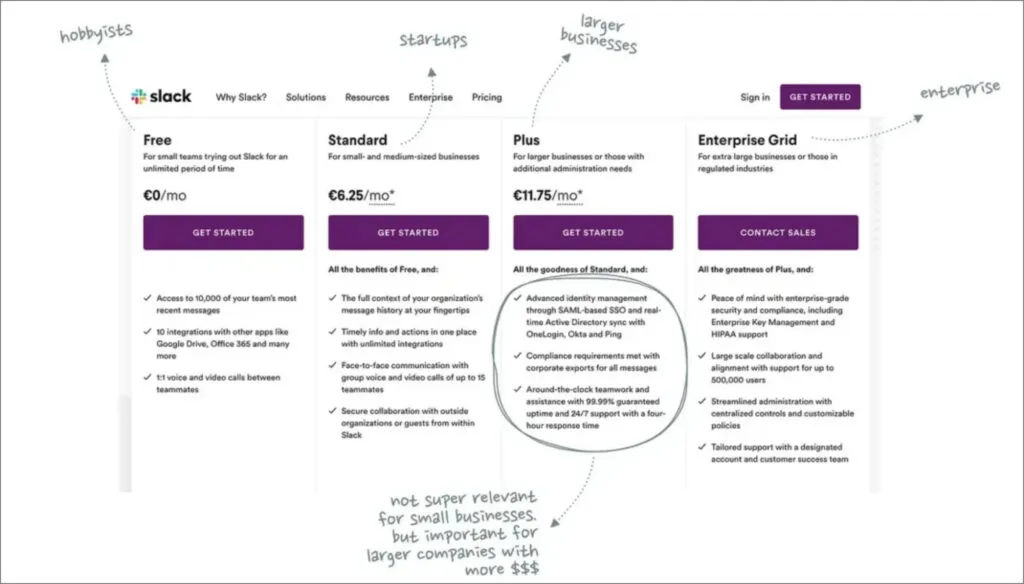
Image Source: Medium
Designing your pricing experiment determines whether results prove reliable or misleading. A falsifiable hypothesis beats vague price testing. To name just one example, “Dropping prices from $50 to $45 will lift conversion enough to raise monthly revenue by 10%”. This forces you to name the variable and the success metric.
Set clear goals and success metrics
Metrics must be defined upfront: conversion rates, average order value, net revenue, churn, or customer lifetime value. Success criteria should be established before launching (e.g., “Variant wins if conversion rises 15% without decreasing ARPU”). Limits that signal an early stop become critical if revenue collapses.
Choose one variable to test
Price points, billing cycles, packaging, and discounts are all testable, but not at once. You cannot determine which caused the outcome if both price and feature set change. One element at a time must be isolated.
Define your test and control groups
Current pricing stays with the control group while the test group receives the variant. Random assignment works best in most cases. Region or time-based assignments should be avoided due to seasonality and competitor moves.
Calculate required sample size
A power calculator determines the participants required to get trustworthy results. At least 1,000 observations per variation are needed for most pricing experiments.
Plan experiment duration
Most pricing tests need 4-8 weeks to produce meaningful results. The environment must stay steady by avoiding new feature launches or promotions mid-test.
How to Run and Analyze Your Pricing Tests
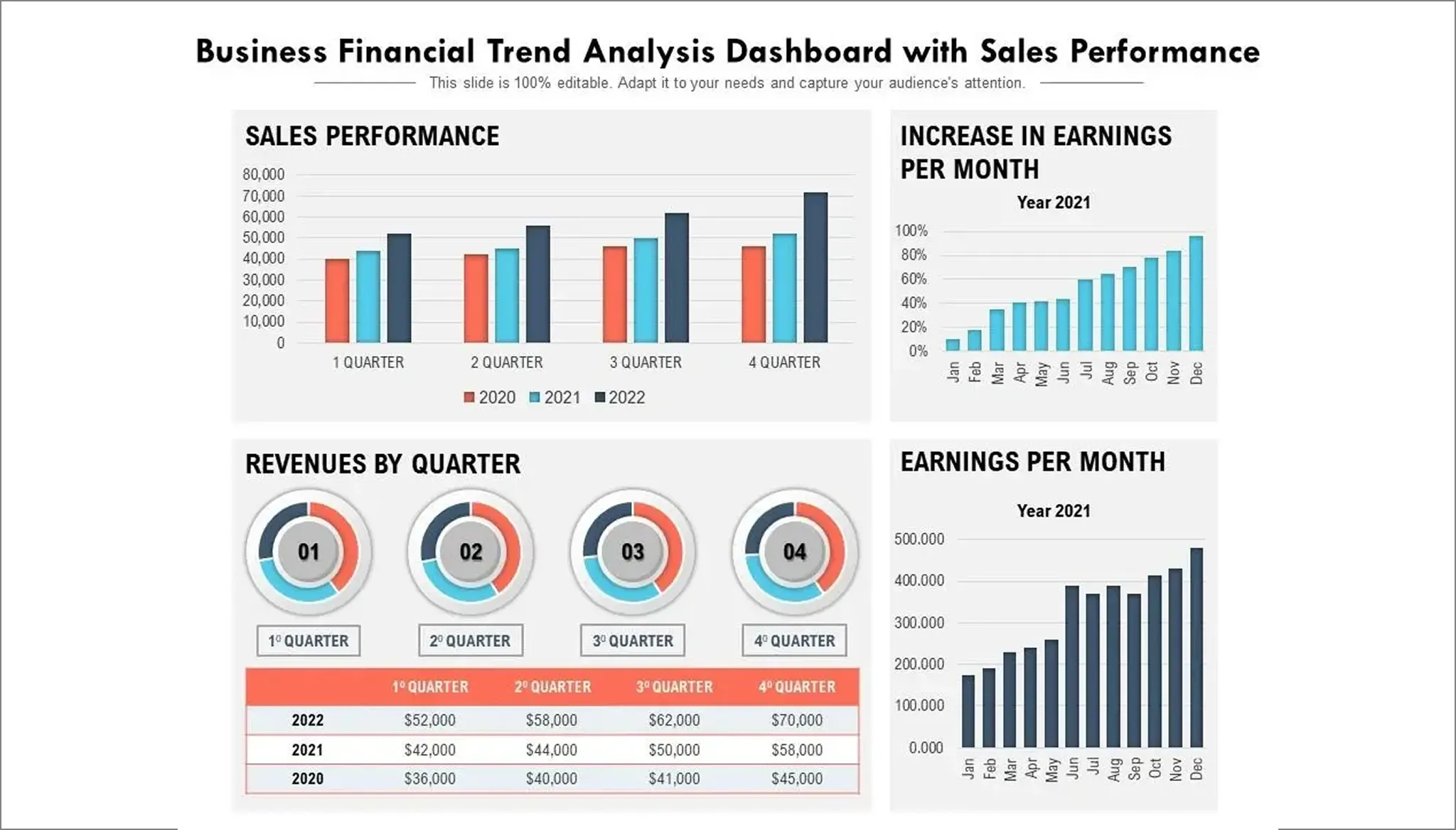
Image Source: SlideTeam
Execution separates successful pricing experiments from failed attempts. Poor implementation invalidates even the best-designed tests.
Implement the experiment
Inform sales, support, marketing and finance teams when experiments go live. Roll out to a small traffic share first. Check for billing errors before you scale up. Dashboards need monitoring, but resist the urge to conclude experiments early. Keep test groups separate so customers don’t drift between control and treatment.
Track the right metrics during testing
Monitor conversion rate, average revenue per user, monthly recurring revenue, customer lifetime value, churn rate and customer acquisition cost. Track revenue per visitor and net promoter score shifts as well. Support tickets and customer feedback reveal pricing perception issues that numbers alone miss.
Analyze results for statistical significance
Confirm results reach statistical validity before you act. A 2% conversion lift means nothing with tiny samples. Use p-values below 0.05 and confidence intervals to verify significance. Segment data by customer type and geography. Short-term wins can mask long-term retention problems, so track what happens after the sale.
Make analytical pricing decisions
Calculate annual effect: “This price increased revenue per visitor by 5%, which equals $X million annually if rolled out”. Adopt winning formulas when they meet success criteria.
Document learnings for future tests
Record the variable tested, effects observed and numerical outcomes. Begin your trip to become skilled at strategic pricing through our Profit Pulse Audit and find hidden profit potential in your current pricing structure. Pricing experiments build on each other when you maintain clear records.
Conclusion
Right now, you have the framework to test pricing changes without destroying customer trust or revenue. Run your first experiment with a clear hypothesis and proper sample sizes. Our Profit Pulse Audit can help you become skilled at strategic pricing and find hidden profit in your current pricing structure. The companies that win are those that test consistently and learn from each experiment. They use data to guide their pricing decisions.