
The Hidden Truth About Individual Pricing: What Customer Data Really Reveals
“This price was set by an algorithm using your personal data” – shoppers in New York now see this surprising message on checkout pages, showing the reality of individual pricing practices.
Retailers set different prices for similar products based on your purchase history, location, and browsing behavior. These sophisticated pricing systems operated quietly until now. New York’s law requires retailers to disclose this practice – with penalties reaching $1,000 per violation if they don’t comply. The Federal Trade Commission found that companies track everything from your location to mouse movements on webpages to determine your price. Your shopping cart’s abandoned items can affect future pricing offers.
Research shows a 1% increase in online prices can boost operating profit by 11%, making this approach attractive to businesses. But critics worry these practices hurt consumer trust and welfare. AI-powered pricing algorithms continue to grow in dynamic markets, and you might question what your digital footprint says about your willingness to pay.
What Is Individual Pricing and How Is It Different?
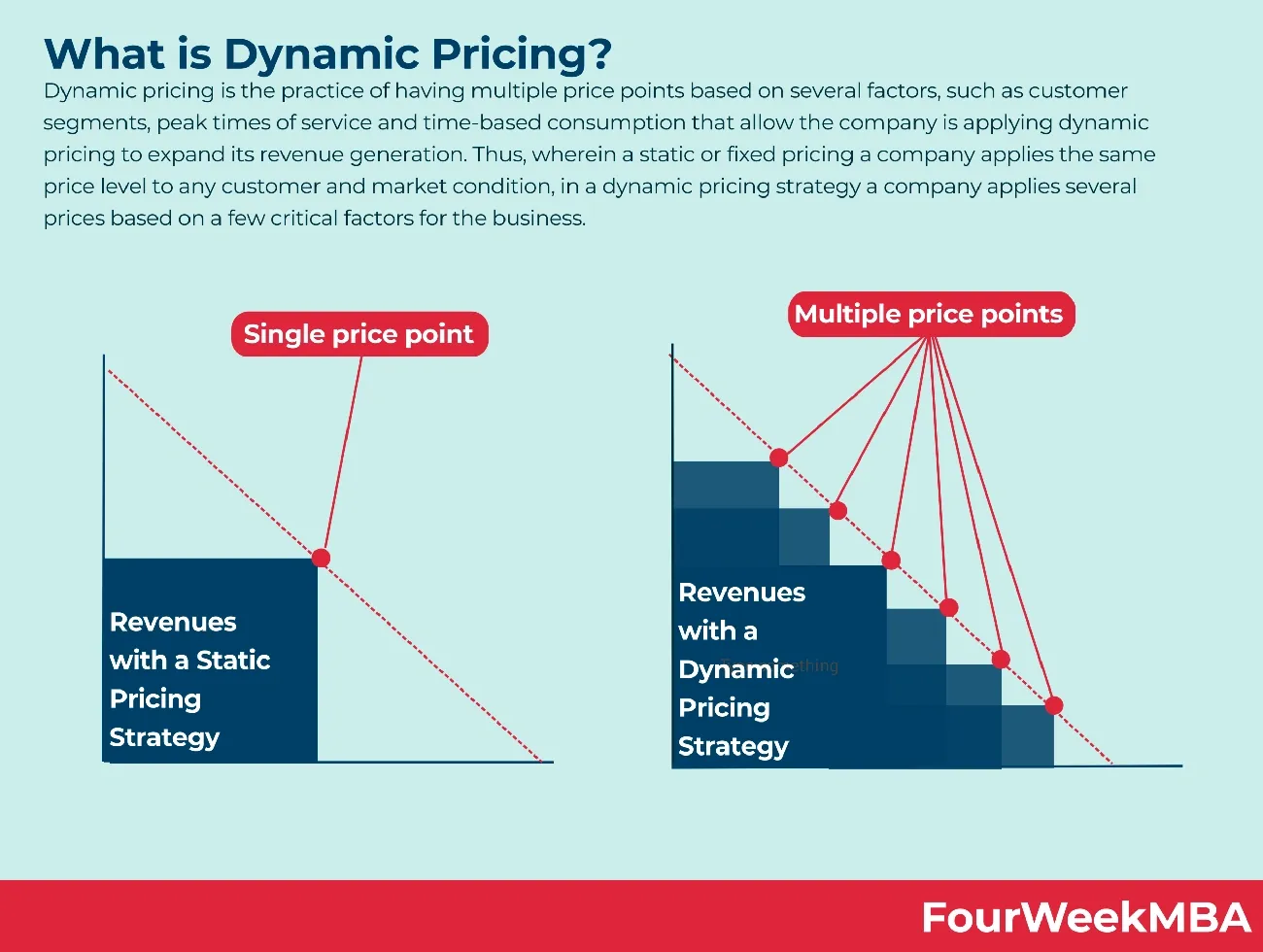
Image Source: FourWeekMBA
Individual pricing marks a radical alteration in how businesses handle customer transactions. This strategy creates unique price points for similar products based on specific customer traits, unlike traditional pricing models.
Definition of personalized pricing vs dynamic pricing
Personalized pricing (also called surveillance pricing) sets different prices for the same product based on a customer’s purchase history, location, and browsing behavior. The system targets individuals instead of groups and wants to determine what each customer will pay.
Dynamic pricing works differently. It adjusts prices based on non-customer factors like time of day, available supply, and competitor pricing. Everyone sees the same price at any given moment. The main difference lies in what drives the price change - personalization focuses on customers, while market conditions control dynamic pricing.
Customized pricing based on user behavior and data
Companies need sophisticated data collection techniques to implement individual pricing. They exploit browsing history, purchase patterns, device type, location data, and subtle digital footprints like mouse movements on webpages. The core team also uses customer loyalty status and demographic information to create detailed pricing models.
These algorithms show remarkable precision. To cite an instance, cosmetics companies target promotions to specific skin types and tones. Shoppers identified as new parents might see higher-priced baby items on their first search page results.
Why individual pricing is gaining attention now
Individual pricing has drawn regulatory scrutiny and public attention. The New York state law requires businesses to disclose algorithm-based pricing, making it the first direct regulation of this practice. Take our free profit pulse audit to learn about how individual pricing could affect your business strategy.
Cashless payments have created what some call a “gold mine” of consumer information. Businesses now see the revenue potential - personalized pricing can expand their audience by offering lower prices to price-sensitive customers while staying profitable with less price-sensitive ones.
In spite of that, concerns about fairness and transparency remain. The FTC’s surveillance pricing market study revealed how extensively personal data influences pricing decisions, which led to calls for greater consumer protection. Understanding this evolving digital world has become crucial for both businesses and consumers.
How Customer Data Powers Custom Pricing Algorithms
Image Source: Ibbaka
Data collection creates a complex network that powers personalized pricing. Modern pricing algorithms process so big amounts of personal information to figure out what you might pay.
Browsing history and device type as pricing signals
Your digital footprint reveals your purchasing power. Mouse movements, time spent on pages, and clicks feed sophisticated pricing models. The device you use can indicate your spending capacity. Research shows that iPhone users see higher prices than Android users for similar products.
Products left in shopping carts become valuable data points that shape future pricing decisions. These signals help retailers predict customer behavior with precision.
Purchase history and loyalty data in pricing models
Your spending habits create a detailed customer profile. Companies study past transactions to group customers based on their willingness to pay premium prices. Loyalty programs excel at gathering customer data. Tesco’s success proves this point—their Clubcard members generate 80% of total sales.
Our free profit pulse audit can show how your pricing strategy performs against industry standards.
Research shows that companies using detailed customer segmentation achieve 10% higher conversion rates with individual-specific pricing strategies. Companies that utilize value-based pricing see 30% higher revenue growth compared to traditional cost-plus models.
Location-based pricing and its implications
Your location affects online prices by a lot. Zone pricing adjusts costs based on regional purchasing power, local market conditions, and economic factors.
To name just one example, booking a New York to Paris flight costs more from the United States than Europe. YouTube Premium demonstrates regional price variations—costing $13.99 monthly in the US but only $1.99 in India. This strategy helps companies maximize revenue while adapting to regional economic differences.
Real-World Personalized Pricing Examples Across Industries
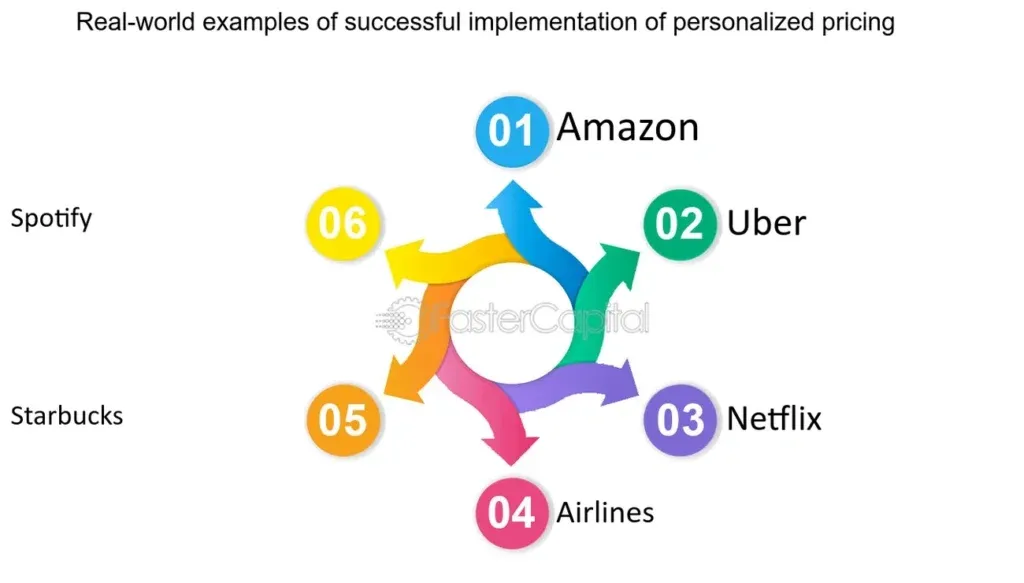
Image Source: FasterCapital
Tailored pricing strategies work differently in various industries. Companies use customer data to optimize their revenue.
E-commerce: Amazon and Booking.com pricing variations
Amazon leads the way in individual pricing implementation. The company adjusts product prices approximately 2.5 million times daily and has seen a 25% revenue increase through these tactics. The e-commerce giant studies customer priorities and shopping habits to create offers that feel personally relevant. Amazon has moved beyond standard dynamic pricing and now tests truly tailored models where prices change based on purchase history and browsing behavior.
Booking.com still uses tailored approaches, even with recent regulatory challenges to its price parity clauses in Europe. Hotel prices dropped by 2.6% in the short term when these clauses were removed in France. Three-star hotels showed a significant 12% price decrease a year later.
Travel: Airline and hotel pricing based on user profile
Delta Air Lines stirred controversy when they announced expanded AI use for pricing. The airline clarified they don’t target customers with “individualized prices based on personal data”, but their AI systems analyze combined purchasing data and predict demand for specific routes.
Hotels show more direct tailored pricing. Casino hotels, to cite an instance, give different rates to players versus non-players staying at the same property. Chain hotels responded more strongly to price parity removal than independents, with price drops of 5.6-8.6%.
Streaming services: Subscription offers based on usage
Want to see how your industry’s pricing practices stack up? Our free profit pulse audit helps you measure your approach against best practices.
Streaming platforms use viewing history to curb subscription churn. In fact, 48% of users have canceled services after failing to find content to watch. Then, 79% kept subscriptions after finding new content. Tailored content proved critical during advertising implementation—64% of viewers said they were more likely to continue watching services with relevant ads.
The Ethics and Legal Pushback Around Personalized Pricing
Regulators have stepped up their oversight of individual pricing. This shift happened because of growing concerns about consumer protection and market fairness.
New York’s disclosure law and its effect
New York led the way as the first state to regulate customized pricing in 2025. The state now requires businesses to display: “THIS PRICE WAS SET BY AN ALGORITHM USING YOUR PERSONAL DATA”. Businesses face penalties up to $1,000 for each violation. The National Retail Federation challenged this requirement on First Amendment grounds. However, a federal judge upheld it and ruled that the disclosure “serves to ameliorate consumer confusion” and represents a legitimate consumer protection interest.
FTC’s investigation into surveillance pricing
The Federal Trade Commission started a formal investigation into “surveillance pricing” in 2024. They ordered eight companies to reveal their pricing practices and data collection methods. The original findings revealed how retailers track specific behaviors—from mouse movements to unpurchased shopping cart items. The FTC found that intermediaries worked with at least 250 clients in industries of all types, from grocery stores to apparel retailers.
Fairness concerns and consumer trust issues
A global investigation showed that 97% of people worry about customized pricing. The biggest problem stems from an uneven exchange of information—businesses collect personal data without customers knowing. This lack of transparency has led 77% of respondents to demand clearer pricing mechanisms.
Transparency vs manipulation: where’s the line?
The ethical line between transparency and manipulation remains unclear. Pricing interfaces with dark patterns can exploit psychological biases. The question of whether algorithmic pricing improves or hinders competition has become more complex. Current competition law “sufficiently captures” explicit collusive agreements but doesn’t deal very well with algorithmic autonomous tacit collusion. Legal experts suggest that companies using AI-driven pricing algorithms should explain their system operations to regulators.
Conclusion
Businesses have transformed how they set prices for individual customers. Your digital footprint now determines what you pay. Algorithms analyze everything from your browsing patterns to device choices. Companies even track specific behaviors like abandoned shopping carts and mouse movements to predict how much you might spend.
Numbers make a strong business case. A mere 1% price adjustment can increase operating profit by 11%. Smart customer segmentation leads to 10% better conversion rates. Notwithstanding that, this analytical approach raises valid concerns about fairness and transparency.
Regulators are stepping in. New York has pioneered a disclosure law that requires companies to tell customers when algorithms use their personal data to set prices. The FTC’s investigation has revealed how personal information influences pricing decisions. This affects businesses of all sizes - from Amazon to travel companies and streaming services.
The path forward in individual pricing depends on striking the right balance. While 97% of customers worry about these practices, companies keep developing complex pricing models. Building consumer trust depends on openness rather than manipulation. The line between helpful tailored pricing and exploitative surveillance pricing stays unclear. This difference grows more significant as AI-powered pricing becomes the norm. Your understanding of how personal data affects prices is vital as these strategies advance. Price tag mechanisms are becoming more visible. This gives you the ability to make better buying decisions. The impact of this transparency on both businesses and customers remains uncertain. This question will influence e-commerce’s future direction.
Key Takeaways
Individual pricing uses your personal data to set unique prices for identical products, fundamentally changing how businesses approach customer transactions and revenue optimization.
• Companies track everything from browsing history to mouse movements, using AI algorithms to predict your willingness to pay for personalized pricing
• New York’s groundbreaking law now requires businesses to disclose “THIS PRICE WAS SET BY AN ALGORITHM USING YOUR PERSONAL DATA” with $1,000 penalty
• Just 1% price increases can boost operating profit by 11%, making personalized pricing highly attractive despite growing consumer concerns
• The FTC investigation revealed 97% of consumers worry about surveillance pricing, highlighting the tension between profit optimization and consumer trust
• Transparency requirements are emerging as the key battleground between helpful personalization and exploitative pricing manipulation
As AI-powered pricing becomes standard practice across industries from Amazon to airlines, understanding how your digital footprint influences what you pay has become essential for making informed purchasing decisions. The future of individual pricing will likely depend on striking the right balance between business revenue optimization and consumer protection through transparency.