
What Most Businesses Get Wrong About Demand-Based Pricing
The prices of goods and services saw dramatic swings from an 18% drop to a 66% increase between 2020 and 2022. Your business success now depends more than ever on understanding demand-based pricing.
Online shopping attracts 76% of internet users, yet many businesses can’t get their demand-based pricing strategies to work. Smart demand pricing helps you make the most of high-interest periods and boost revenue when market conditions favor it. But what exactly is demand-based pricing? This pricing model moves beyond static approaches by focusing on customer behavior, market trends, and competitive factors instead of just costs. Your business can respond to market changes through live updates, though many organizations still misuse these principles.
This piece will help you clear up common misconceptions about demand-based pricing examples. You’ll learn how demand-oriented pricing really works and practical ways to fix your current strategy that maximize profits while keeping customers happy.
What Most Businesses Misunderstand About Demand-Based Pricing
Many businesses try to implement demand-based pricing strategies but miss significant elements that hurt their efforts. A closer look shows three basic misconceptions that keep derailing pricing initiatives in any discipline.
Confusing Dynamic Pricing with Demand-Based Pricing
The biggest misunderstanding comes from treating dynamic pricing and demand-based pricing as similar concepts. Demand-based pricing adjusts prices based on consumer demand levels. Dynamic pricing takes into account more factors like market demand, supply levels, competitor actions, and customer buying behaviors.
People often think all dynamic pricing works like surge pricing. Surge pricing is just one type of dynamic pricing that raises prices during peak demand. Demand-based pricing can raise prices during high demand and lower them strategically when demand drops.
Airlines show this well. They might cut fares in off-peak seasons to boost bookings, not just charge more during holidays. This difference matters since 80% of dynamic pricing actually involves price cuts, while only 20% are price increases.
Overlooking Customer Perception and Trust
Companies often undervalue how price changes affect their customers’ trust. Customer complaints about pricing peak at 4 PM and hit their highest point on Saturdays—right when most people shop. Studies also show 66% of customers switch brands or stores because of pricing issues.
The way customers react varies based on pricing approach:
-
Personalized pricing boosts repeat purchases by 25%
-
Demand-based pricing shows a 15% increase
-
Time-based pricing leads to a 10% improvement
All the same, poor demand-based pricing during holiday shopping has caused up to 20% drops in repeat purchases among middle-income shoppers who saw the increases as unfair. Better price perception can boost sales by 2-5% and increase margins by 5-10%.
Ignoring Long-Term Brand Impact
The most expensive mistake happens when companies chase quick revenue gains without thinking about long-term brand effects. Today’s savvy consumers question price changes they see as random or unfair.
The life-blood of successful demand-based pricing balances quick revenue gains with lasting customer satisfaction. Companies that don’t explain their pricing clearly create customer distrust that damages their brand over time. Promotion-heavy pricing can make consumers more sensitive to price—they start shopping for discounts instead of staying loyal to brands.
Even when companies explain price changes openly, some customers might see frequent changes as greed—and this view sticks once it takes hold. Companies must communicate price changes clearly so customers see them as fair value adjustments. Quick profit-focused price hikes might boost revenue now but can trigger major customer pushback later.
What is Demand-Based Pricing and How It Actually Works
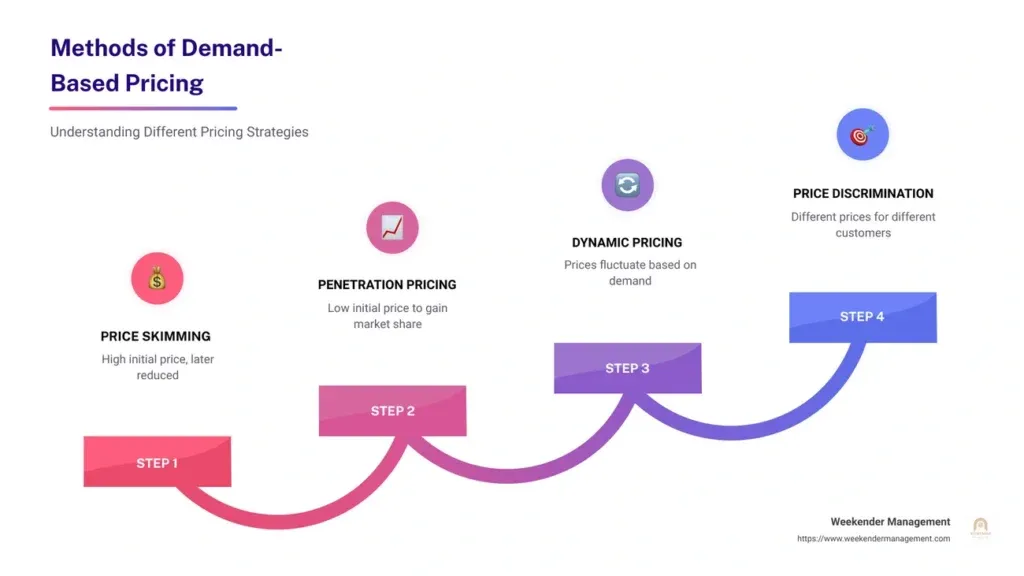
Image Source: Weekender Management
Demand-based pricing shows a fundamental change from fixed price points to a flexible pricing approach. demand-based pricing definition covers any pricing method where prices change based on market demand through specific logic or algorithms. Your business can capture the best value in different market conditions with this strategy.
Real-Time vs Periodic Price Adjustments
Price adjustment timing creates a key difference in how businesses implement demand pricing. Real-time changes update prices instantly as markets shift, while periodic adjustments happen on a set schedule.
Real-time pricing lets businesses react right away to demand changes. Ride-sharing platforms adjust their fares based on current demand, competitor rates, and market conditions. These systems look at live data and update prices automatically.
Periodic adjustments work on a planned schedule. An expert breaks down the typical process:
-
Set volume targets
-
Track daily sales against targets
-
Update prices to meet targets
-
Review prices daily
-
Keep adjusting until you hit target volume with optimal revenue
This structured approach creates a balance between quick responses and stable operations. Businesses that want controlled price changes rather than constant updates find this method useful.
Role of Demand Forecasting Tools
Demand-based pricing examples work best with advanced forecasting tools. Modern systems combine past data, current insights, and predictive models to create better pricing strategies.
Smart algorithms analyze huge amounts of data to find patterns and predict demand accurately. These tools keep track of:
-
Competitor price changes
-
Past sales trends
-
How customers react to price changes
-
Seasonal patterns and outside factors
Automated systems streamline important tasks like collecting data, watching competitors, and changing prices. This makes work easier and more efficient. AI takes demand oriented pricing further by helping systems learn from data and spot patterns better than humans can at a large scale.
Demand-Oriented Pricing vs Cost-Based Models
What is demand-based pricing compared to traditional cost methods? The main difference lies in how they calculate prices.
Cost-plus pricing starts with production and distribution costs, then adds a profit margin. This simple method ignores market conditions and customer views.
Demand-oriented pricing looks at what customers will pay at different times. This method studies market conditions, competitor moves, and customer behavior instead of just costs. Companies find this strategy valuable when demand changes often or when different customers value products differently.
Businesses using demand pricing can raise prices when demand is high to maximize revenue. They can also lower prices when demand drops to keep sales moving and maintain cash flow.
Demand-based pricing helps match your prices with real market conditions instead of just costs. This approach optimizes revenue across markets while staying responsive to customer needs and competition.
Common Pitfalls in Implementing Demand-Based Pricing
Companies often struggle to execute demand-based pricing even when they understand the theory well. Research shows that businesses repeatedly face three major barriers that can derail their pricing strategies.
Lack of Clear Pricing Objectives
Companies without well-defined pricing goals face a major roadblock in demand pricing implementation. Businesses bounce between different priorities when they lack specific, measurable targets. They might chase volume one day and margins the next. This random approach turns pricing decisions into reactive moves instead of strategic choices.
Your pricing objectives should match broader business goals such as profit maximization, market share growth, or brand enhancement. Most companies make these common mistakes:
-
They don’t set numerical targets for pricing initiatives
-
Their objectives stay static as markets change
-
They skip regular strategy updates
Many retail sectors still rely on old spreadsheets, instincts, and basic formulas. This leads to revenue loss and margin problems. Companies also tend to copy competitor prices without knowing their costs or customer base.
Failure to Segment Customers Effectively
Poor customer segmentation creates another major issue. Companies create deals and discount structures without really understanding their customers’ value perceptions. This results in substantial margin leakage when prices drop below what customers would pay.
Sales teams’ instincts often take priority over data-driven decisions. While sales intuition matters, it focuses more on closing deals than optimizing margins. Companies need segmentation methods that work with existing processes, not against them.
Customer segmentation becomes harder as your customer base grows. Statistical methods become crucial for finding meaningful segments when you have thousands of customers. Companies resort to guesswork in pricing without historical data and analytics.
Inadequate Data Infrastructure
Data management presents the biggest technical challenge. Small or new businesses find it especially hard to implement demand-oriented pricing without reserves of detailed historical data because it needs extensive data collection and analysis.
Quick demand-based pricing adjustments need integration with larger tech systems or ERP platforms. This helps businesses analyze large amounts of information immediately. You need sophisticated analytics tools and expertise, which creates problems for resource-limited organizations.
Small businesses can improve their demand-based pricing capabilities through cloud-based ERP systems. Still, the core challenge remains the same - proper data infrastructure lets businesses adjust prices based on demand trends, consumer behavior, and sales history.
These challenges show the gap between knowing what is demand-based pricing and making it work. Success requires careful planning of objectives, segmentation strategy, and technical setup before starting any pricing initiative.
When Demand-Based Pricing Works Best (and When It Doesn’t)
The impact of demand-based pricing changes a lot based on market conditions and product types. Not every business gets the same value from this pricing strategy. You need to know where it works best and where it doesn’t to make it work well.
High-Volatility Markets: Travel, Events, Fashion
Businesses that see big swings in demand benefit the most from demand-oriented pricing. Airlines are a perfect example - their seat prices can change up to 11 times while a customer searches. Hotels see their occupancy rates swing between 30-90% through the year, which makes them ideal for demand pricing.
Fashion stores deal with seasonal demand changes of 20-40%. They need flexible pricing to maximize profits in peak seasons and clear stock in slow periods. These industries stick to certain price ranges - hotels usually stay within 15-25% while airlines go from 30-70%.
Perishable Goods and Time-Sensitive Services
Demand-based pricing definition works great for products that expire or time-bound services. Food delivery services see demand jump up to 300% at dinner time compared to afternoon hours, so they charge more at peak times. Grocery stores cut prices by 30-50% on food close to expiry dates to reduce waste.
Event tickets show classic demand pricing patterns. About 40% of sports venues and concert halls now use dynamic pricing. Their prices can swing from 25-200% based on predicted attendance. These venues have limited space, which makes what is demand-based pricing vital to their business model.
Low-Elasticity Products: When to Avoid
Demand-based pricing examples don’t work well in markets where prices barely affect buying decisions. Healthcare products show price elasticity below 0.1 - demand stays almost the same whatever the price. Simple groceries like milk and bread have elasticity around 0.3, so they’re not good for demand pricing.
Industries with heavy regulation or price controls should be careful. Laws often limit how much public utilities, medicine, and essential services can change their prices. Beyond legal rules, steady pricing builds customer trust. Studies show 76% of people prefer stable prices for daily needs, even if they pay a bit more on average.
The success of demand-oriented pricing depends on finding the right balance. Your pricing flexibility should match what customers expect and how the market works without causing trust issues or regulatory problems.
How to Fix Your Demand-Based Pricing Strategy
A flawed demand-based pricing strategy needs careful improvement rather than a complete overhaul. Companies see up to 25% profit increases after using the right value-based pricing. This structured approach brings substantial returns.
Arranging Pricing with Customer Value Perception
Demand pricing success starts with understanding what customers truly value. Companies that excel in customer perceived value are 60% more likely to retain customers and 50% more likely to achieve above-average profits. Your pricing should match perception through these steps:
-
Voice of Customer (VoC) research identifies which aspects of your offerings deliver highest perceived value
-
Brand reputation analysis shows its effect on willingness to pay—70% of consumers pay more for brands they see as offering superior value
-
Unique features that solve specific customer pain points can boost perceived value by 30%
Your products can command up to 16% higher prices with exceptional customer service.
Using ERP and CPQ Tools for Immediate Adjustments
Configure, Price, Quote (CPQ) systems merged with Enterprise Resource Planning (ERP) platforms are the foundations of demand-oriented pricing. Sales teams can access live inventory and capacity data while configuring products. This links sales promises with production reality.
First, it pulls immediate data from your ERP and CRM to verify availability and costs. Next, it calculates optimal prices based on market trends, competitor pricing, and customer profiles. Finally, it automates documentation so sales teams generate detailed proposals and contracts within seconds.
Companies that make use of these tools report impressive improvements: 80% reduction in operational costs and 96% faster time to quote.
Monitoring Competitor Response and Market Feedback
AI-powered monitoring solutions remove manual competitor price tracking while providing useful insights. These platforms analyze competitor pricing moves and suggest adjustments that help stay competitive while protecting margins.
Successful demand-based pricing examples implementation requires:
-
Immediate price tracking with instant alerts for competitor price changes
-
Monitoring of all sizes across marketplaces and direct-to-consumer sites
-
Profit protection settings ensure price adjustments maintain minimum margins
A/B testing and regular sales analysis help determine customer response to changes and revenue improvements without losing trust.
Conclusion
Price adjustments based on customer demand can benefit your business when you get them right. You’ve learned that winning pricing strategies need clear goals, smart customer grouping, and a resilient data setup. Many businesses think dynamic pricing and demand-based pricing are the same thing. They don’t see how this affects customer views and their brand’s future.
Smart pricing matches what customers value instead of just looking at costs. This works especially when you have businesses in markets like travel and fashion where demand keeps changing. Companies that sell perishable goods or time-sensitive services can also adjust their prices based on what’s happening in the market right now.
You can dodge common mistakes by picking specific pricing goals that fit your company’s bigger picture. It also helps to group your customers properly so you can get the best value from different market segments without upsetting anyone. Rather than going with your gut or basic formulas, ERP and CPQ tools help you make precise price changes as they happen.
Note that demand-based pricing doesn’t work for everything. Products that don’t respond much to price changes or face strict rules do better with steady pricing. The trick is to balance flexibility with what customers expect.
You ended up needing both market knowledge and customer psychology to price things right. Companies get the best results when they watch their competitors while focusing on how customers see value. Sign up for our pricing updates to learn the newest strategies and what works best. As you get better at this, you’ll find pricing becomes less guesswork and more of a strategic tool that helps your business grow and make money.
Key Takeaways
Understanding demand-based pricing correctly can transform your business profitability, but most companies make critical mistakes that undermine their pricing strategies and damage customer relationships.
• Don’t confuse dynamic pricing with demand-based pricing - demand-based focuses specifically on consumer demand levels, while dynamic pricing includes broader factors like supply and competitor actions.
• Prioritize customer perception over short-term gains - 66% of customers switch brands due to pricing concerns, and poorly implemented demand pricing can trigger 20% drops in repeat purchases.
• Invest in proper data infrastructure before implementation - effective demand pricing requires sophisticated forecasting tools, customer segmentation, and real-time analytics to avoid relying on guesswork.
• Choose the right markets for demand pricing - it works best for high-volatility industries (travel, events, fashion) and perishable goods, but avoid it for low-elasticity products like healthcare essentials.
• Align pricing with customer value perception using technology - integrate ERP and CPQ systems for real-time adjustments while monitoring competitor responses to maintain competitiveness without sacrificing margins.
When implemented correctly with clear objectives and proper infrastructure, demand-based pricing can increase profits by up to 25% while maintaining customer trust and long-term brand value.