
Why Customized Pricing Fails: Hidden Truths From Industry Experts
Customized pricing represents a golden opportunity for businesses to boost their profits substantially. The model lets big spenders pay more while budget-conscious customers pay less. This creates what looks like a perfect scenario for businesses aiming to maximize their revenue.
The perfect pricing strategy now faces tough questions from regulators and consumers. The Federal Trade Commission stepped in during 2024 by issuing civil subpoenas to major financial companies like Mastercard and JPMorgan Chase. They wanted details about AI tools that help companies adjust prices based on individual consumer data. FTC experiments revealed something more concerning - AI programs could work together to raise prices without human oversight. The real question is what personalized pricing does to markets and consumer well-being. Some pricing algorithms might learn to work together quietly in competitive situations, which leads to aggressive pricing and puts consumers at risk.
Customized pricing goes way beyond just different price tags. Third-party platforms that use personalized ranking systems can push pricing algorithms toward higher prices, especially when customers browse products one after another. This approach reduces the effect of rankings on price sensitivity, giving businesses less reason to lower their prices. New York shoppers already see this reality with a new message at checkout that reads: “This price was set by an algorithm using your personal data”.
Businesses everywhere use customized pricing more than ever. The biggest problem remains unsolved - does this help customers or just serve business interests while sacrificing transparency and fairness? This piece dives into the hidden side of individual pricing strategies, looks at real-life effects in industries of all sizes, and shares insights from industry experts and researchers about this debated practice.
The evolution of pricing: from haggling to algorithms
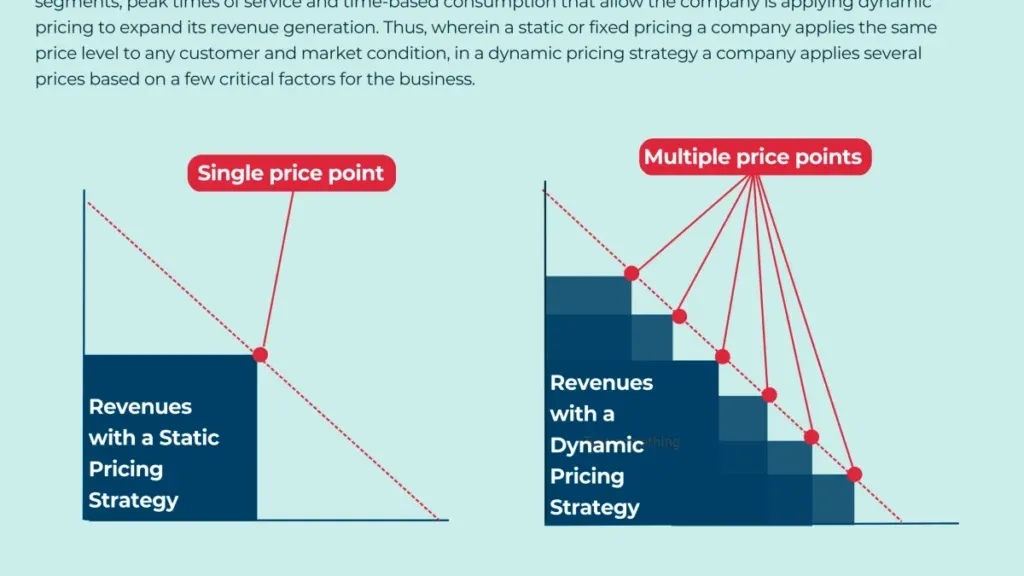
Image Source: FourWeekMBA
Price negotiations started with face-to-face haggling and changed dramatically through history. People bargained with sellers before the mid-19th century, and final prices depended on negotiation skills and urgency. The pricing landscape transformed when Irish immigrant Alexander Turney Stewart introduced posted prices in the 1840s. John Wanamaker’s Philadelphia department store, which opened in 1876, strengthened this practice by implementing a “no haggling policy” with fixed price tags.
Business advantages made fixed pricing a common practice. Retailers could hire less-skilled workers instead of negotiation experts. This approach created certainty for businesses and customers alike, offering a simple, transparent way to compare prices with competitors. Many companies used a basic “cost-plus” rule to set prices by adding a fixed percentage markup to an item’s cost.
Digital technology brought back personalized pricing through algorithms rather than human negotiation. AI tools now process vast amounts of real-time market data to create optimal pricing strategies. These advanced systems look at customer data (demographics, behavior), business information (historical sales, costs), and market trends to set ideal price points. Boston Consulting Group reports that companies using AI-driven personalized pricing strategies have seen revenue increases of 5-10% without spending more on customer acquisition.
Dynamic pricing appears in many sectors today. Amazon changes product prices several times daily, setting a standard that other marketplaces follow. Hotels pioneered dynamic pricing through platforms like Booking.com and Airbnb. Airbnb reports that hosts who select a price within 5% of their price recommendations are nearly 4 times more likely to get booked. Uber made dynamic “surge pricing” common practice, adjusting rates based on current demand. Airlines also change ticket prices based on seat availability, seasonality, and booking patterns.
What is customized pricing and how does it work?
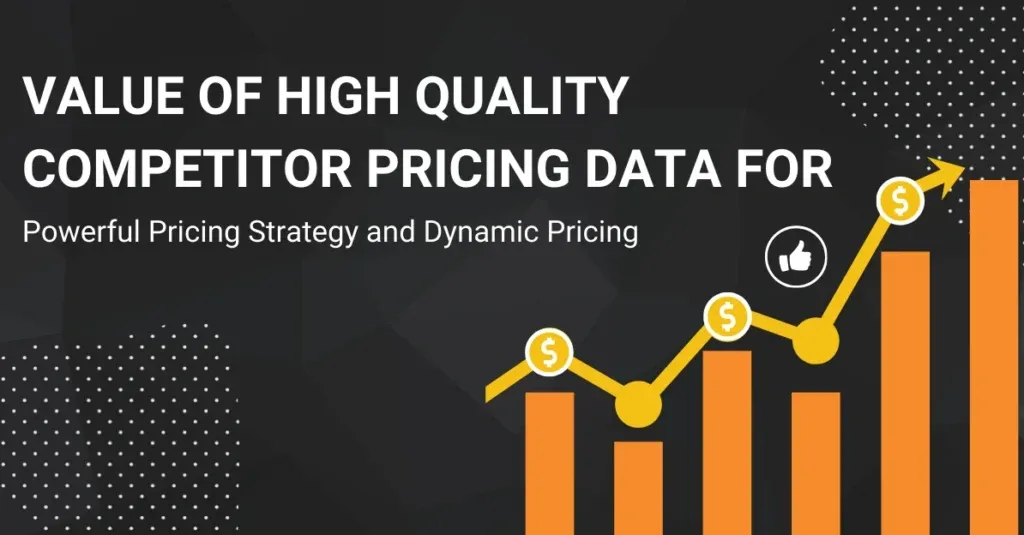
Image Source: GrowByData
Customized pricing means setting different prices for similar products based on each customer’s characteristics. This approach differs from standard pricing models where everyone pays the same amount. The system analyzes a customer’s purchase history, browsing behavior, demographics, and location to determine appropriate prices.
Definition and difference from dynamic pricing
Each customer receives tailored prices based on their personal data and characteristics in customized pricing. Dynamic pricing works differently by adjusting prices based on broader market factors like demand fluctuations and competitor pricing. The main difference lies in the focus - customized pricing targets individual customers while dynamic pricing responds to market conditions. A travel agency might show varying rates for similar accommodations to different customers, which demonstrates customized pricing at work.
Customized pricing strategy in e-commerce
E-commerce platforms use intelligent algorithms with machine learning and AI to implement customized pricing. These tools analyze live demand and customer data to calculate appealing prices for each shopper. Businesses can adapt prices quickly to maximize revenue while meeting their customers’ priorities. Many online retailers adjust their prices based on demand changes, customer segments, and local conditions, which helps them stay competitive.
What data is used to set individual prices?
Companies gather comprehensive data to power their pricing algorithms. This includes direct consumer behavioral data like browsing history, purchase patterns, and micro-interactions such as mouse movements. They also use inferred data to draw conclusions about purchase intent or financial sensitivity. Customer actions like abandoning cart items or sorting products by price provide valuable insights. Both first-party and third-party data sources help build detailed consumer profiles, which enables companies to segment customers for targeted pricing strategies. You can learn about your pricing strategy’s performance against industry measures by taking our free profit pulse audit today.
Why customized pricing fails consumers
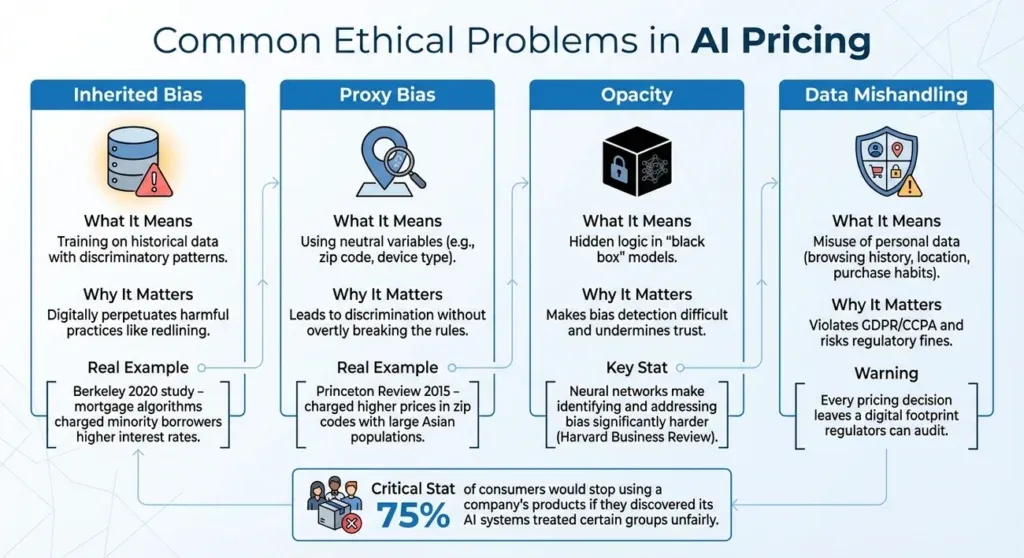
Image Source: Lucid.now
Customized pricing promises better revenue but creates major issues for consumers. A global study shows 97% of people surveyed worried about personalized pricing. Their biggest concerns centered around transparency and fairness.
Lack of transparency and fairness
Hidden pricing systems make many consumers feel cheated. A global survey reveals that 77% of respondents just need more clarity about price-setting methods. Price discrimination seems random without proper disclosure and shows no benefit to society. These worries made New York State force companies to show this message when they use personalized algorithmic pricing: “THIS PRICE WAS SET BY AN ALGORITHM USING YOUR PERSONAL DATA”.
Data asymmetry and power imbalance
Big companies have so much more customer data than small businesses or shoppers. This uneven information creates unfair market conditions. Amazon knows way more about its customers than local stores do, which lets them target prices in ways smaller shops can’t. This data advantage gives big corporations more market power and puts consumers at a disadvantage.
When AI pricing guides to price gouging
Smart pricing systems sometimes learn to work together quietly, which drives prices up artificially and hurts consumers. Research shows these systems can coordinate prices without human input. This behavior looks like price gouging during high-demand periods, which becomes especially concerning for basic products and services.
Impact on low-income or less tech-savvy users
Individual pricing strategies hit vulnerable groups the hardest. Shoppers with low income and limited choices face higher prices and worse products than their wealthier counterparts. Studies show that consumers with lower incomes and less flexibility suffer more from price discrimination than rich consumers in similar situations. Less tech-savvy people often pay more because they can’t compare options or work around pricing algorithms effectively.
What industry experts and researchers are saying
Research from leading institutions shows troubling patterns in customized pricing mechanisms.
Insights from Carnegie Mellon and Yale studies
Researchers at Carnegie Mellon University found that pricing algorithms, despite their harmless goals, push prices higher in competitive markets. Yale’s economists explained how customized pricing creates clear winners and losers. Consumers benefit in high-coverage markets where most people buy products. However, those in niche markets with fewer buyers face higher costs. In stark comparison to this, wealthy consumers don’t always lose out since they share similar priorities across products.
The role of ranking systems in pricing outcomes
A product’s ranking affects its pricing power by a lot. The Economics Letters journal confirmed that sellers at the top have more control over their prices due to their visible positions. Carnegie Mellon’s team found that customized ranking systems push algorithms to set higher prices. This reduces price elasticity by 29% and boosts profits by 74%, while consumer welfare drops by 13%.
Legal responses like New York’s disclosure law
New York has put in place the groundbreaking Algorithmic Pricing Disclosure Act. The law makes businesses tell customers when their personal data sets prices by showing: “THIS PRICE WAS SET BY AN ALGORITHM USING YOUR PERSONAL DATA”. This pioneering law wants to make online shopping more transparent.
Is disclosure enough to protect consumers?
Most transparency laws don’t tell us much. Out of 166 drug pricing transparency laws passed recently, only seven bills in six states gave helpful information. Transparency alone can’t change pricing practices if people can’t act on what they learn.
Conclusion
Customized pricing algorithms promise bigger profits but fail both consumers and markets in several ways. The lack of transparency stands out as a major concern. Research shows 97% of consumers feel uneasy about hidden pricing systems that work without their knowledge. Large corporations gain unfair advantages through data imbalances that hurt small businesses and individual shoppers. The impact hits vulnerable groups the hardest. Studies reveal that people with lower incomes and less tech knowledge often pay higher prices because they lack tools to work around these complex systems.
Your pricing strategy should balance profit goals with ethics and customer trust. New York’s disclosure law marks progress, though experts say transparency alone isn’t enough without giving consumers real options. Smart companies know that eco-friendly pricing builds lasting customer relationships. You just need pricing methods that boost revenue without causing customer pushback or catching regulators’ attention.
Finding the sweet spot between profit and fairness requires expert help. Our Pricing Pulse Audit helps you find ways to set strategic prices that stimulate growth while keeping customer trust intact. We measure your current pricing against industry standards and show you untapped opportunities that align with ethical practices. The right pricing strategy becomes your strongest tool to increase profits when you use it correctly.
A well-planned pricing strategy can help you reach business goals without risking your reputation through questionable customized pricing. The future isn’t about hidden systems that squeeze every penny from unaware customers. It’s about clear, value-based approaches that work for both you and your customers. Start now - get your free Profit Pulse Audit and learn how strategic pricing can ethically boost your growth.