
Adjusting Prices After Launch Without Losing Trust
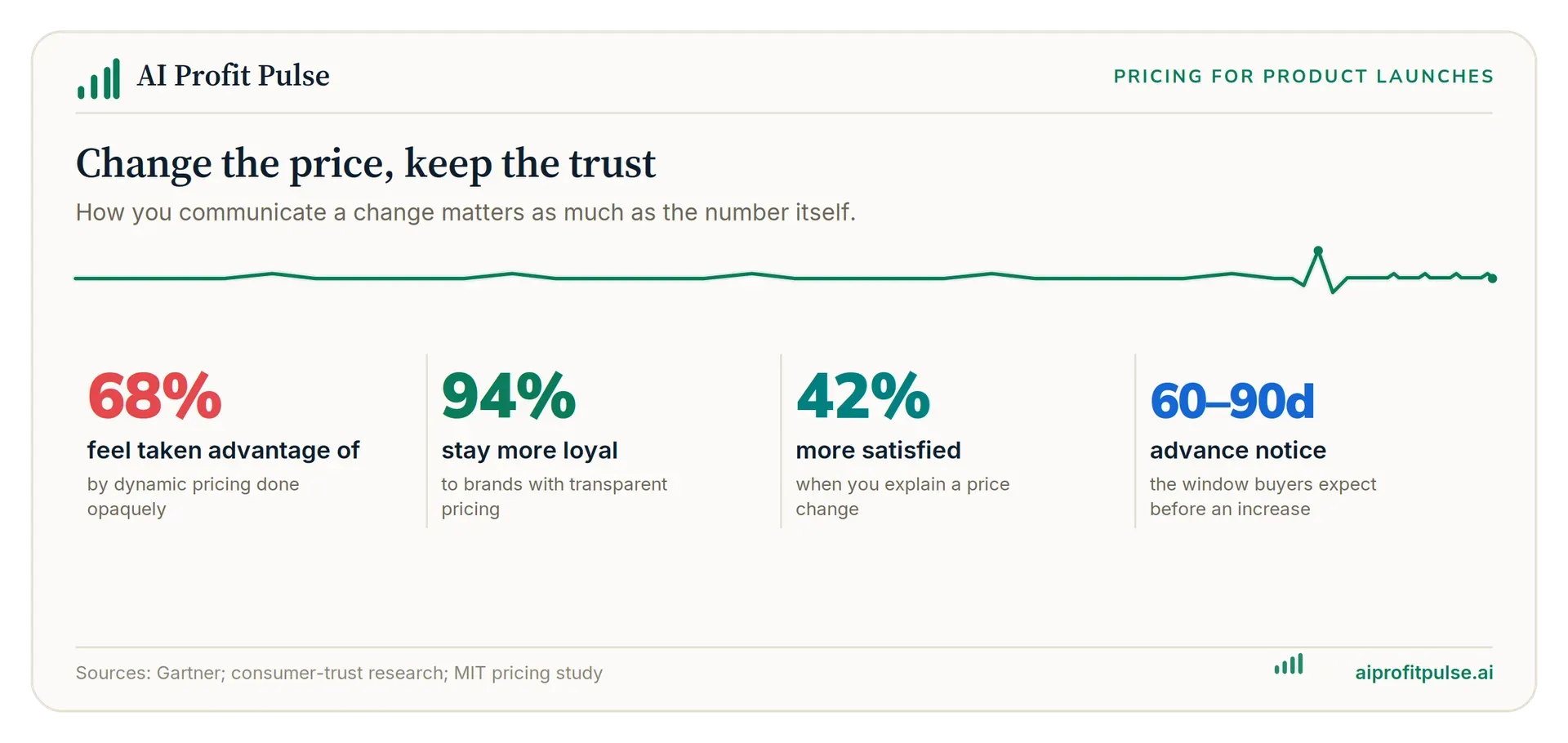
Your launch price was a starting point, not a permanent one. Costs move, value grows, and the number you set on day one will eventually need to change. The risk is not the change itself. It is that a clumsy price increase can burn the trust you spent the whole launch earning. Gartner found that 68 percent of consumers feel taken advantage of by dynamic pricing when it happens without explanation, and that feeling does not stay quiet. It shows up as churn, chargebacks, and one-star reviews.
The good news is that buyers accept price changes they understand. Handled well, an adjustment can even deepen trust. This piece shows how to move the price without moving customers to the exit. If you want ideas like this each week, subscribe to the AI Profit Pulse newsletter for one evidence-based read at a time.
Why do price changes break trust?
Not because the price went up. Because the customer felt something was done to them, not explained to them.
Fairness is about the process as much as the number. Research consistently shows that buyers judge a price change by whether the reasoning feels legitimate, not just by the size of the increase. When the logic is hidden, people fill the gap with the worst assumption: that you are exploiting them. That is why surprise charges are so corrosive. More than 60 percent of shoppers abandon a cart when an unexpected cost appears, and the damage outlasts the lost sale.
There is also an expectation gap you can use. Only about a third of consumers believe prices should rise when a company’s costs rise, yet a large share say they simply want more transparency about how prices are set. That gap is your opening: most buyers are not demanding low prices, they are demanding a reason. Give them one and the same increase lands very differently. Our piece on what transparent pricing really means goes deeper on why this works.
What does a trustworthy price change look like?
It has four features, and none of them are about the number.
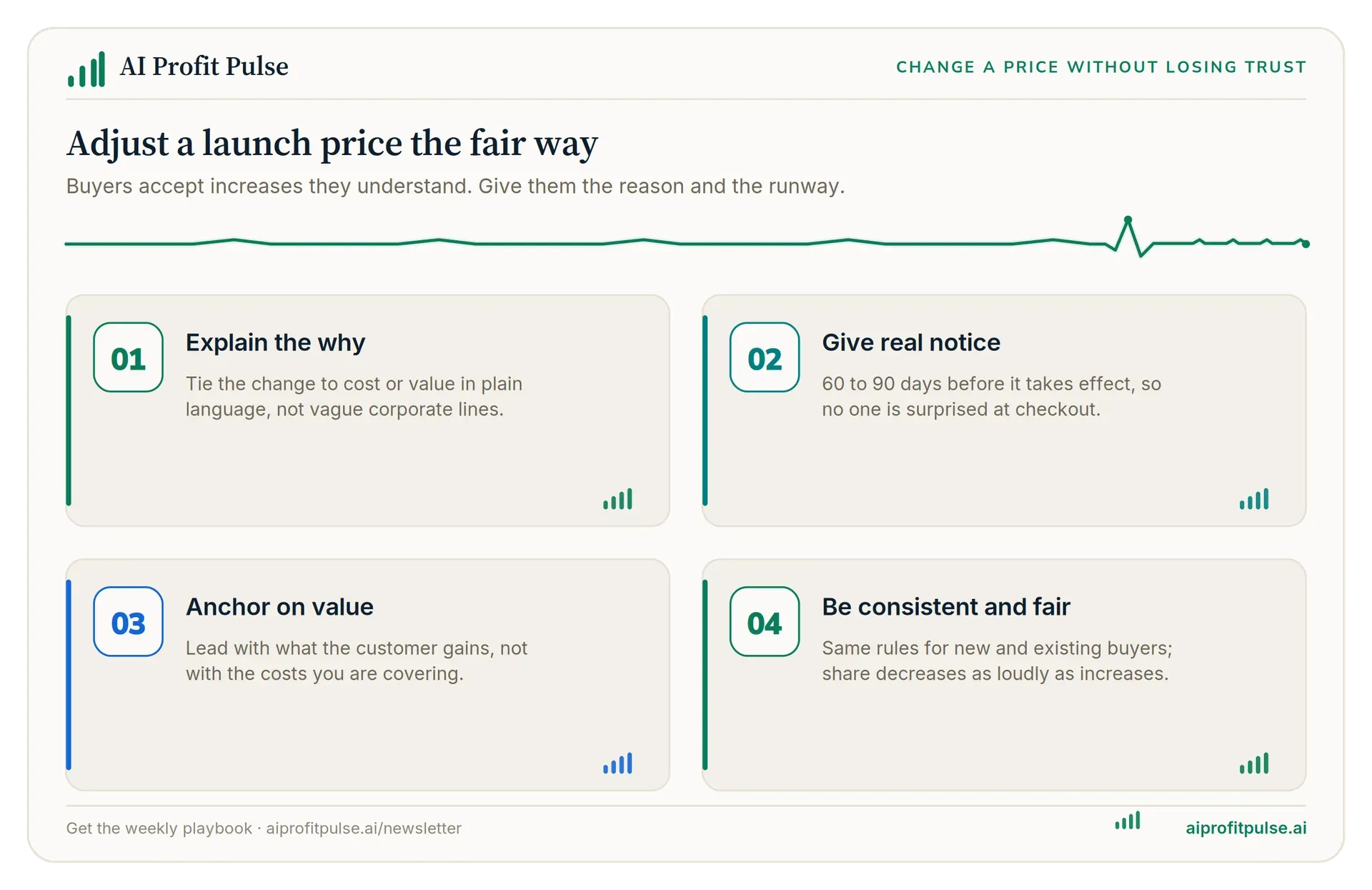
Explain the why. Tie the change to a real cause the customer can understand, whether that is rising input costs or genuinely expanded value. Vague corporate language (“to continue serving you better”) reads as evasion. A specific, honest reason reads as respect. A well-run explanation is powerful: even simple explanations for price changes have been shown to lift customer satisfaction by up to 42 percent compared with unexplained changes.
Give real notice. Sixty to ninety days is the window buyers expect before an increase takes effect. Notice turns a surprise into a plan, and it gives loyal customers time to adjust rather than react. No one should discover your new price at checkout.
Anchor on value. Lead with what the customer gains, not with the costs you are covering. The message is not “our expenses went up,” it is “here is what your subscription now includes, and here is the new price.” Value framing is why 94 percent of customers say they stay more loyal to brands with transparent pricing.
Be consistent and fair. Apply the same rules to new and existing buyers, avoid punishing loyalty by charging your longest-tenured customers the most, and communicate decreases as loudly as increases. Brands that explain both increases and decreases see higher customer lifetime value than those that only explain when the number goes up. For the mechanics of doing this with algorithms in play, see our guide to making dynamic pricing work fairly.
The trap to avoid: quiet, personalized changes
The fastest way to lose trust is to change prices invisibly and individually. When customers discover that others paid less for the same thing, the reaction is not disappointment, it is betrayal, and loyal customers who find they pay more than new ones feel it most sharply. If you personalize, be able to explain the basis, and never rely on opacity to hold a price. Our deeper look at the customer trust gap in dynamic pricing covers how to keep confidence intact.
The takeaway
You will change your launch price. Whether that strengthens or damages the business depends almost entirely on how you communicate it. Explain the why, give real notice, anchor on value, and stay consistent and fair. Do that and a price increase becomes proof that you respect your customers, which is the opposite of what most companies manage. For a fuller playbook, our guide to customer pricing strategies that keep buyers coming back pairs well with this one.
Want one evidence-based pricing idea in your inbox each week? Subscribe to AI Profit Pulse, and if you would like a fast read on where your pricing is quietly costing you trust or margin, the Pricing Pulse Audit is a short place to start.