
How AI Analyzes Retail Pricing Data to Predict Customer Behavior [2026 Study]
AI-powered retail pricing analysis has changed how businesses compete today. The artificial intelligence market reached 184 billion U.S. dollars in 2024, up 50 billion from the prior year. Experts project it will reach 826 billion U.S. dollars by 2030. But the real story is how this technology affects your pricing strategies and customer relationships. A consumer group found that 75 percent of Instacart products showed different prices for different customers, with some prices 23 percent higher than others.
AI-powered pricing systems are changing how you analyze retail pricing models. These systems process huge amounts of market data at once, so your business can quickly adjust prices to stay competitive. Machine learning pricing algorithms utilize vast amounts of data to predict consumer behavior accurately. The system recognizes patterns and forecasts future purchasing trends by analyzing purchase history, browsing behavior, and social media activity. On top of that, retail pricing data science delivers real results - companies that use AI-driven customer insights see up to a 40% increase in customer retention. This piece shows you how AI dynamic pricing systems analyze retail data to predict customer behavior. You’ll learn strategies that boost profitability while keeping your customers loyal.
How AI Connects Retail Pricing Data to Customer Behavior
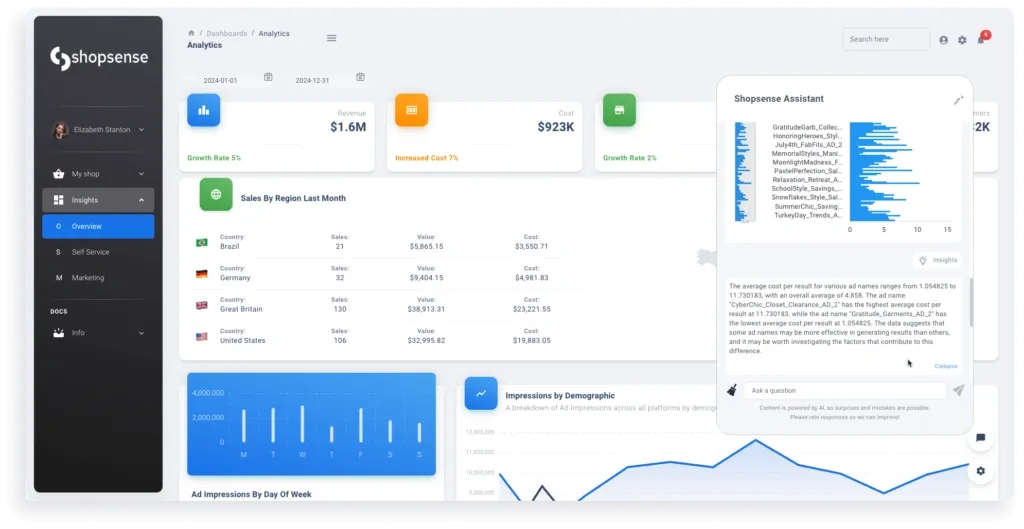
Image Source: Sisense
Modern pricing artificial intelligence bridges retail pricing data with consumer purchasing decisions. Data from large datasets shows that price sensitivity varies substantially among customer segments and product categories. This knowledge helps create targeted pricing strategies.
Analyzing purchase frequency and price sensitivity
Price sensitivity, measured through elasticity, is vital to retail pricing models that work. AI systems look at past purchase data to spot customers who often buy items on sale or switch brands based on price. These customers are flagged as price-sensitive consumers. This knowledge helps businesses understand their shoppers’ priorities about products and how pricing shapes perception. Machine learning pricing algorithms can detect subtle changes in elasticity based on store location, competition, and shopper traits. These factors are the foundations for better pricing decisions.
AI estimates price elasticity from actual behaviors rather than surveys. Purchase history, engagement patterns, and promotional sensitivity provide real data. These systems adapt continuously as new data emerges and create live pricing feedback loops that respond to market changes instantly. Retailers can now create pricing strategies that balance profit margins with competitive positioning.
Identifying seasonal demand patterns from historical data
Seasonal demand patterns challenge retailers, but these predictable changes create opportunities when analyzed properly. AI algorithms spot obvious and subtle seasonal trends that humans might overlook. Retail pricing data science uses sophisticated pattern recognition to turn historical information into practical insights about demand peaks and valleys.
Yes, it is true that AI forecasting uses multiple data types. Historical sales transactions, customer foot traffic, weather records, local event calendars, competitive promotions, and school schedules all play a role. This detailed approach creates precise demand forecasts. You can optimize pricing during high-demand periods and avoid too much discounting during predictable slow times.
Correlating pricing changes with customer churn
Companies worldwide lose approximately $1.60 trillion due to customer churn, often because of poor pricing strategies. Research shows customers rarely leave just because prices are high. They leave when prices change unexpectedly or exceed their acceptable range.
AI-powered retail pricing data analysis can identify at-risk customers through their behavior patterns. It develops individual price plans to keep them. The system groups customers based on buying habits, priorities, and brand involvement. Each group gets its own pricing strategy. Studies confirm that price elasticity works differently in B2B relationships compared to B2C contexts. Small price increases usually don’t cause immediate customer departures in long-term business relationships.
AI Techniques Used in Retail Pricing Models
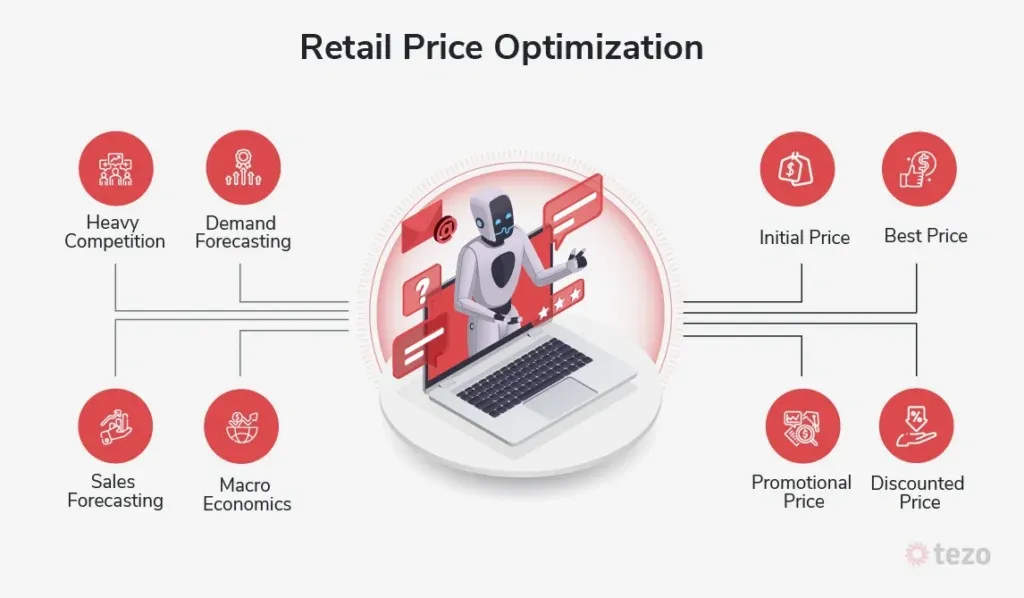
Image Source: Tezo
Modern retail pricing models rely on sophisticated AI algorithms that give retailers the tools to analyze customer behavior and optimize profits. Different machine learning approaches help solve various parts of the pricing puzzle, and each brings its own strengths to retail pricing data science.
Supervised learning for demand forecasting
Supervised learning algorithms help predict future sales patterns from historical retail pricing data. Decision trees create paths through data that split along feature values to forecast demand, while Support Vector Machines (SVMs) create optimal hyperplanes that separate different demand levels. Neural networks work like the human brain and excel at finding complex relationships in sales data through connected layers. These methods combine to create more reliable forecasts by balancing out individual biases. The techniques are a great way to get better decisions by comparing large datasets and spotting complex patterns that older forecasting methods often miss.
Reinforcement learning in dynamic pricing engines
Dynamic pricing systems use reinforcement learning to optimize prices by learning which actions lead to the best long-term rewards. The system treats pricing like a repeated task where an agent learns the best prices based on market conditions through constant market interaction. The algorithm figures out the right pricing policy by connecting situations to actions that bring the highest profit. Both tabular Q-learning and deep Q-networks (DQN) work well, with DQNs using neural networks to calculate optimal values in complex retail settings. Retailers benefit as they can adjust prices that work for both service providers and customers.
Natural language processing for sentiment-based pricing
Natural language processing (NLP) turns customer reviews into applicable information for pricing through sentiment analysis. Retailers can adjust their pricing strategies by understanding how customers feel about their products. To cite an instance, studies show that negative reviews make booking rates drop more sharply than positive reviews make them rise. NLP models that merge with pricing systems can soften price adjustments after negative feedback, which reduces both how much and how long sales suffer.
Clustering algorithms for customer segmentation
Clustering techniques put similar customers into groups, which lets retailers create targeted pricing strategies. K-means clustering and Density-Based Spatial Clustering of Applications with Noise (DBSCAN) spot distinct customer segments based on how they spend, what they like, and how they behave. Research shows k-means clustering got the best results with a Silhouette Score of 0.6 compared to other segmentation algorithms. It also helps learn about customers better than traditional methods by adapting to changes in customer data automatically. These mathematical algorithms help businesses create custom marketing plans and pricing models that line up with how each group responds to prices.
Real-Time AI Dynamic Pricing in Action
Dynamic pricing engines automatically adjust prices by analyzing retail pricing data based on current market conditions. These sophisticated systems process billions of data points at once and boost revenue through strategic price positioning.
Competitor price tracking and adjustment
Amazon’s AI dynamic pricing system adjusts approximately 2.5 million prices every day. This allows them to respond to market changes instantly and increase revenue by 25%. Walmart also uses pricing artificial intelligence to track competitor pricing. Their system suggests immediate price adjustments when competitors change their prices. You can take our free profit pulse audit to see how your pricing strategy matches up against market leaders.
Stock-level based price optimization
AI-driven pricing systems constantly monitor inventory levels and adjust prices accordingly. The system helps sell overstocked items faster or maintain limited inventory. A furniture line with excess stock might get temporary price cuts to clear warehouse space. The system slightly raises prices when items sell faster than expected to maximize revenue from remaining units.
Geo-targeted pricing using location data
Modern retail pricing models factor in location-specific data to create regional pricing strategies. Intelligence Node’s platform monitors regional price changes and helps brands track tariffs in target regions. A Wall Street Journal report revealed an interesting trend - retailers like Home Depot set different prices for different locations, with customers in affluent areas actually charged less.
Time-of-day pricing strategies in ecommerce
Machine learning pricing algorithms study sales patterns throughout the day and make time-sensitive adjustments. Companies adjust their prices during holidays or special events to boost revenue. The systems look at factors like peak hours and create opportunities to slightly increase prices during busy evening periods.
Challenges and Ethical Concerns in AI Pricing
AI’s growing role in retail pricing raises many important ethical questions that businesses must tackle along with technical issues. Research has shown some concerning practices that need attention from everyone in the industry.
Transparency in machine learning pricing decisions
“Black box” algorithms in pricing systems have led to increased focus on explainable AI principles. The FTC study found that retailers track everything from exact location to mouse movements on websites to set individual prices. All the same, 90% of customers believe companies should be open about how their data powers AI systems.
Avoiding discriminatory pricing practices
Algorithmic bias continues to be the biggest problem since only 46% of shoppers believe AI recommendations work well for all customers. A Wall Street Journal report found that retailers charge different prices based on location, with lower prices in wealthy areas. The numbers show that 53% of consumers think AI-powered facial recognition will make racial discrimination worse.
Data privacy concerns in personalized pricing
Personalized pricing relies on consumer data, but only 28% of shoppers believe their information stays safe with retailers. Of course, 87% of customers want access to review their collected data. The California Attorney General now looks into how companies use browsing patterns and demographics to determine prices.
Regulatory compliance in AI-driven pricing systems
Interest in AI regulation has exploded—with 440% more AI-related bills introduced in 2023 than the year before. Nine states looked at eighteen price disclosure bills in 2025. Companies must create internal guidelines for ethical AI use while making sure their algorithms don’t enable price fixing or unfair pricing.
Conclusion
AI-powered retail pricing analysis leads the way in creating strategic business advantages in 2026. Our analysis shows how pricing AI turns massive data sets into applicable information that affects your profits. Your business can now predict customer behavior with amazing accuracy. This lets you adjust prices based on how often people buy, seasonal trends, and what competitors do.
These tools open up great opportunities to grow revenue. Companies that use AI pricing strategies see their customer retention jump by up to 40%. This shows the clear link between smart pricing and long-term profit growth. Your pricing strategy needs to go beyond basic margin math. You need evidence-based approaches that adapt to market changes through up-to-the-minute data analysis.
These advantages come with important ethical questions. You need to focus on being transparent and fair while protecting privacy as regulators watch more closely. Companies that find the right balance between AI efficiency and ethical principles build better customer relationships and trust in their brand.
Pricing technology keeps getting better. Your success against competitors depends on knowing how to use these tools well. Start improving your pricing strategy today with our free Profit Pulse Audit. This full picture will show exactly how your business can use AI pricing to respond to customer behavior, stay ahead of competitors, and stimulate steady profit growth. Smart pricing remains one of your strongest tools for profit - and now AI makes it available whatever your company’s size or technical skills.