
How Analytics Segmentation Predicts Your Next Customer Purchase [2025 Data]
AI could add up to $4.4 trillion in annual global productivity worldwide. Analytics segmentation has become the life-blood of this revolution. Marketing teams implementing AI could see productivity rise by 5% to 15%, which represents about $463 billion in annual value. Predictive analytics combines historical data with machine learning algorithms and statistical models to forecast future customer behavior. Your customers’ understanding matters more than ever, especially with the global predictive analytics market projected to hit USD 82.35 billion by 2030. This technique improves customer segmentation by revealing deeper insights into priorities and likely actions.
Marketing professionals rapidly adopt AI and change how they work with customer data. Predictive segmentation helps businesses anticipate consumer needs, refine targeting, optimize pricing, and allocate resources dynamically. Companies now collect, process, and analyze searchable information like customer names, purchase histories, and website interactions to create tailored experiences that boost conversions significantly.
This complete guide shows how advanced analytics segmentation predicts customer purchases. You’ll learn about the data sources behind these predictions and practical ways to implement these strategies for business growth in 2025 and beyond.
What is Predictive Segmentation in 2025?
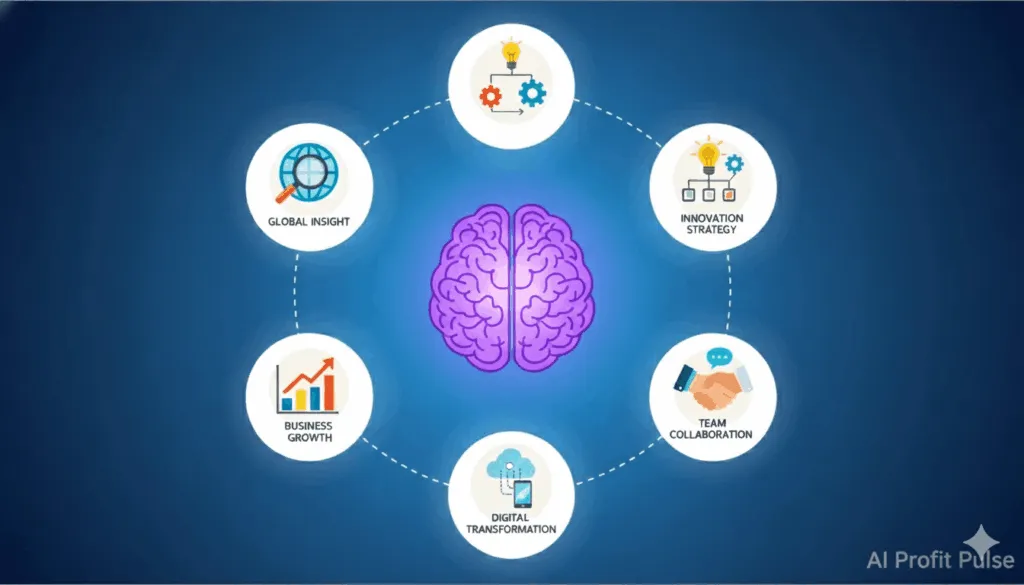
Predictive segmentation is a platform capability that forecasts customer behavior by analyzing past interactions and actions with high accuracy. Traditional methods only categorize customers, but predictive segmentation looks ahead to their next moves.
Definition and role in customer journey mapping
Predictive segmentation uses advanced statistical algorithms and machine learning models to analyze historical and real-time customer data. It creates dynamic customer profiles that update as behaviors change. AI-powered tools process big amounts of information to identify patterns across customer touchpoints and predict future needs.
By 2025, predictive segmentation has become essential to customer journey mapping. The technology analyzes browsing patterns, content engagement, and repeat visits to understand real customer interests. Rather than giving all visitors similar experiences, predictive segmentation adapts in real-time based on individual behavior.
Your marketing team can use this capability to:
-
Identify high-intent visitors and customize on-site experiences
-
Adjust product recommendations and website content dynamically
-
Deliver personal messaging that matches customer priorities
-
Predict customer disengagement and take proactive retention steps
Predictive segmentation also calculates prediction scores showing how likely customers will take specific actions—from converting to staying inactive or churning. This insight gives you the ability to encourage positive behaviors while preventing unwanted ones, which leads to better customer retention, loyalty, and revenue.
Difference between traditional and predictive segmentation
By 2025, traditional and predictive segmentation approaches show clear differences. Traditional methods rely mainly on historical data and static customer attributes. They create fixed segments based on demographic information that rarely updates automatically. Predictive segmentation is different in several key ways:
Traditional segmentation looks at past behavior, while predictive models focus on the future. These models forecast what customers will do next instead of just grouping them by past actions.
Predictive segmentation blends multiple data types:
-
Demographic information (age, gender, income)
-
Behavioral data (website interactions, product views)
-
Transactional patterns (purchase frequency, average order values)
-
Psychographic information (interests, values, lifestyle choices)
Predictive models create dynamic segments that evolve as new data comes in. These adaptive groupings adjust to changing customer behavior, staying relevant in ever-changing markets. Predictive segmentation learns continuously. AI models improve their accuracy with new data.
Traditional methods need manual updates and recategorization.
Predictive segmentation makes personalization timely. These models can forecast needs with precision—like predicting when customers need to replenish products before running out.
Real-time updates combined with predictive capabilities help your business create targeted marketing initiatives that reach customers at the right moment in their trip. This approach gives a complete view of each customer by combining multiple data dimensions. You can predict needs, personalize experiences, and optimize marketing strategies with exceptional precision.
Key Data Sources for Predicting Customer Purchases
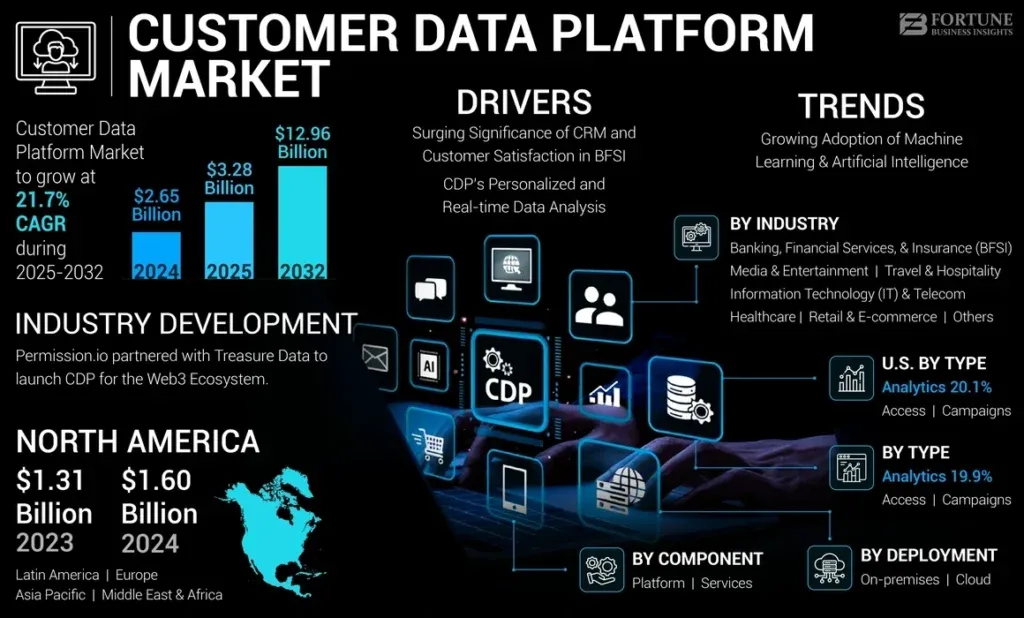
Image Source: Fortune Business Insights
“Without big data, you are blind and deaf and in the middle of a freeway.” — Geoffrey Moore, Technology analyst and author, known for expertise in technology adoption and market dynamics
Data collection is the backbone of any successful analytics segmentation strategy. Businesses that utilize detailed data sources for predictive models will show 85% higher sales growth than those using limited datasets by 2025. Let’s look at the data sources that help predict purchases accurately.
Behavioral data: clicks, scrolls, and session paths
Behavioral analytics captures signals from users that show their intent and priorities. Every digital interaction creates solid evidence of user engagement patterns. We tracked behavioral data through:
-
Click-through rates on promotional elements
-
Scroll depth measurements that show content engagement
-
Session paths that reveal navigation patterns and product discovery
Session replays give you a direct view of how users interact with your product. You can watch their actions, spot friction points, and understand behavior in context. Heatmaps also provide visual snapshots of visitor clicks and engagement, quickly showing which elements grab attention and which ones users ignore.
Transactional data: order frequency and AOV
Transactional data gives exceptional insight into purchasing patterns and customer value. This data has details about what customers buy, their purchase timing, and spending amounts. Machine learning tools now sort and extract analytical insights from transaction histories, giving a detailed point of view on consumer spending habits. Through transactional segmentation, you can group customers by:
-
Product categories they buy most often
-
Purchase timing and frequency patterns
-
Average order value across different product lines
The RFM (Recency, Frequency, Monetary) model remains especially effective for transaction-based segmentation in 2025. You can identify high-value customers, spot those who might leave, and create targeted retention strategies.
Campaign data: UTM tracking and referral sources
UTM parameters are vital tracking tools that show which marketing efforts drive traffic and conversions. These URL tags tell you exactly which campaigns, channels, and specific ad creatives get results.
Your UTM tracking should have parameters for source (referring platform), medium (marketing channel type), and campaign name. This data lets you:
-
Track performance from first click to final conversion
-
Find which campaigns deliver the highest ROI
-
Move budget to top-performing channels confidently
UTM tracking helps you distinguish between traffic sources—whether from email newsletters, social media platforms, or paid search campaigns. This creates clear attribution paths for each conversion.
Demographic and contextual data: device, location, time
Demographic information adds significant context to purchase predictions. Traditional data points like age, gender, and location now work with newer contextual signals in 2025. Companies can access current-year and five-year demographic estimates for over 2,000 socioeconomic characteristics.
Contextual data captures situational factors around each interaction:
-
Device type and operating system
-
Geographic location during browsing sessions
-
Time-of-day engagement patterns
-
Seasonal or event-based behaviors
Your predictive models become more powerful when demographic profiles combine with contextual signals. This improves personalization capabilities and timing accuracy.
Product interaction data: PDP views, wishlists, and video plays
Product interaction data shows customer interest levels and purchase intent through specific engagement metrics. You can track how users explore product details, save items to think about later, and watch product media.
Key product interaction metrics include:
-
Product detail page view duration
-
Wishlist additions and removals
-
Video plays and completion rates
-
Product comparison activities
These engagement signals help you distinguish casual browsers from serious shoppers who are ready to buy. By analyzing which product features get the most attention and how users review options, you can build sophisticated prediction models that anticipate buying decisions before they happen.
Types of Customer Behavior That Influence Segmentation
Customer behavior patterns are the life-blood of effective analytics segmentation. They reveal insights that go far beyond traditional demographic groupings. These patterns help you anticipate future actions and create tailored experiences that appeal to your audience’s specific needs.
Navigational behavior: how users explore
The way customers discover and interact with your digital assets reveals their navigational behavior. Shoppers begin their trip through search queries, menu navigation, or promotional banners. You can see the natural exploration paths that lead to purchases by tracking clickstreams, page view sequences, and exit points.
The search bar usage and keyword priorities offer vital insights into customer intent and product discovery processes. Different segments naturally categorize and find products through their menu and filter priorities. Your team can identify conversion bottlenecks and streamline customer pathways by understanding these navigational patterns.
Transactional behavior: what and how often they buy
Your customers fall into distinct categories based on their purchasing history and spending habits. The RFM (Recency, Frequency, Monetary) framework proves valuable as it explores three dimensions: recent purchases, buying frequency, and typical spending amounts.
Transaction analysis reveals clear patterns:
-
High-end purchasers versus discount seekers
-
Category specialists versus diverse shoppers
-
Seasonal buyers versus consistent purchasers
These insights create highly targeted marketing campaigns. Customers in loyalty programs spend an average of 38% more per visit than walk-ins. The brand appeal grows stronger too - members of loyalty programs choose your brand 59% more often than competitors.
Engagement behavior: content interaction and reviews
Brand interaction goes beyond purchases when we look at engagement behavior. Content consumption, review posting, social sharing, and multimedia interaction paint a complete picture. Entertaining content drives higher engagement rates. Different interactive elements create unique responses - contests increase “likes” while questions generate more comments.
User-generated photos and videos have grown in influence by 2025. Visual content helps potential customers process information better. Product reviews and demonstrations become valuable segmentation tools. Fresh content creates more engagement than reshared material. This highlights the importance of authentic interactions in your analytics segmentation.
Retention behavior: loyalty and repeat visits
The way customers stick with your brand shows their retention behavior. This type of segmentation separates first-time buyers from repeat shoppers and loyal program members. Loyalty program members generate 12-18% more incremental revenue growth each year compared to non-members. These members make weekly purchases 43% more often. Trust plays a crucial role in retention. Studies show that clear data practices and verification systems boost customer trust and engagement. The chances of a third purchase rise above 50% after the second purchase due to habit formation. This makes retention a key focus in your analytics segmentation strategy.
The ability to understand these behavioral patterns through advanced analytics segmentation has become crucial for predicting customer actions by 2025. Machine learning models now recognize these behaviors with remarkable accuracy. This allows you to anticipate needs instead of just reacting to them, which changes how you connect with customers throughout their journey.
How Machine Learning Powers Predictive Segmentation
“Data is the new oil.” — Clive Humby, British mathematician and entrepreneur, founder of Dunnhumby, pioneer in customer data analytics
Machine learning algorithms are the technological foundations of modern analytics segmentation. They turn vast customer datasets into actionable predictions. These sophisticated systems spot patterns that human analysts cannot see and help businesses predict customer decisions before they happen.
Regression and classification models for purchase prediction
Logistic regression is a key technique in purchase prediction because it calculates probability outcomes for binary scenarios (will buy/won’t buy). The sigmoid function helps estimate how likely a customer will complete a purchase based on multiple variables. This method shows exactly how each customer attribute affects purchase probability. A customer spending one more minute browsing might increase purchase probability by 2%.
Random forest models improve predictions through ensemble learning and use multiple decision trees for better accuracy. This technique handles complex, non-linear relationships well while staying computationally efficient. These models analyze several features:
-
Past purchase frequency and recency
-
Website interaction patterns
-
Product priorities
-
Demographic attributes
The models use cross-validation techniques, especially 10-fold validation, to stay reliable with new customer data.
Clustering for dynamic segment creation
Dynamic customer segmentation works better than static approaches and adapts to changing behavior patterns. The LRFMS model (Length, Recency, Frequency, Monetary, Satisfaction) builds on traditional RFM analysis by adding dimensions that capture the complete customer relationship.
Multi-dimensional time series (MTS) clustering techniques play a vital role in analytics segmentation. These methods include:
-
Dynamic time warping (DTW-D) for overall pattern matching
-
Shape-based distance (SBD) to track pattern development
-
Complexity-invariant dissimilarity (CID) to handle varying data complexity
Natural customer groupings emerge from these clusters that traditional segmentation might miss. Research shows that choosing the right dissimilarity measure matters more than the algorithm itself.
Neural networks for complex pattern recognition
Deep learning neural networks have changed predictive segmentation by finding subtle patterns in multidimensional customer data. Sequential neural networks with dense layers excel at capturing non-linear relationships between predictors and customer lifetime value (CLV).
These advanced models process customer information in stages:
-
Input layer receives raw customer attributes and behaviors
-
Hidden layers identify complex relationships between variables
-
Output layer delivers probability scores for predicted actions
Recent research shows neural networks are exceptional at integrating various customer metrics. Net Promoter Score (NPS) and Customer Effort Score (CES) affect neural networks’ predictive accuracy for Customer Lifetime Value estimation substantially. Average Transaction Value (ATV) contributes to prediction accuracy but has less influence.
Continuous learning from real-time data
Modern predictive segmentation systems evolve through immediate learning capabilities. Unlike static models needing manual updates, today’s AI-powered systems refine predictions automatically as new customer data arrives.
This adaptation process follows a clear pattern:
-
New behavioral data enters the system
-
Algorithms detect pattern changes in customer segments
-
Models adjust predictive weightings automatically
-
Segment boundaries evolve to stay relevant
Analytics segmentation becomes more precise over time with ongoing refinement. Amazon’s recommendation engine learns continuously from customer interactions and generates about 35% of the company’s revenue through more accurate personalization.
The most advanced systems now merge segmentation with individualization to create “segments of one” through hyper-personalization at scale. Businesses can move customers between different segments instantly as their behavior changes and maintain relevant connections throughout the customer lifecycle.
Real-Time Personalization Using Predictive Segmentation
Your business can act on customer insights instantly through real-time personalization. This approach puts predictive segmentation into practice as customers browse your digital properties. By 2025, predictive models will anticipate customer needs and deliver targeted experiences through multiple channels.
Dynamic homepage and PDP adjustments
Product detail pages (PDPs) have evolved beyond static displays. These pages now adapt to individual shoppers through AI-powered personalization that analyzes user behavior, past purchases, and browsing patterns. The system watches clicks, time spent, and interactions to customize content for customers who visit your site.
Machine learning algorithms help adjust dynamic product information sections to match each potential buyer’s needs. These adaptable elements show:
-
Product recommendations based on browsing history
-
Similar products that match individual priorities
-
Other options that fit customer taste profiles
The results speak for themselves. Companies using dynamic PDPs see better engagement and up to 30% more conversions.
Contextual nudges and exit-intent offers
Contextual nudges are well-timed messages that respond to specific user actions. These small interactions trigger based on how far users scroll, time spent, exit intent, visit frequency, and where they came from. They appear as modals, banners, or sticky bars and give timely prompts without disrupting shopping.
Exit-intent technology spots when visitors might leave your site and shows targeted offers at crucial moments. It tracks cursor movements toward the close button, window switches, or long periods of inactivity. Studies show the best exit-intent campaigns can convert up to 19.63% of visitors.
AI-powered product recommendations and bundles
AI-powered bundling has changed how retailers showcase related products. These systems create product combinations by studying transaction data, browsing behavior, search queries, and customer profiles. Advanced recommendation engines now use product embedding models that map features in multiple dimensions to find connections between different items.
The business results are impressive. Amazon’s recommendation engine generates about 35% of total sales through better personalization. Companies that use AI bundling report 18-23% higher customer satisfaction and up to 30% more repeat purchases from bundle buyers.
These systems also increase average order values by showing products that customers often buy together. The technology learns from each interaction and creates bundles that change with market conditions. This creates a shopping experience that feels natural and valuable to your customers.
Measuring the Business Impact of Predictive Segmentation
Measuring how predictive analytics segmentation affects business is crucial to justify technology investments. Companies need proper frameworks to track performance improvements in multiple areas.
Customer Lifetime Value (CLV) improvements
Predictive segmentation boosts CLV by finding high-value customer segments and making retention efforts better. Research shows that existing customers spend 31% more than new ones. The numbers are even better for active customers who spend 67% more during months 31-36 compared to their first six months.
Companies that use customer segment analysis see better sales 80% of the time. If you want a quick way to see where your own numbers stand, you can take our free AI Profit Pulse audit to uncover your potential CLV gains from advanced analytics segmentation.
Conversion rate and retention rate tracking
Revenue can jump up to 95% with just a 5% increase in customer retention. Predictive models help companies spot at-risk customers early and take action before they leave.
The best way to check retention effectiveness is to track both future and past indicators:
-
Customer health metrics (satisfaction scores, churn rate)
-
Engagement patterns (product usage, support interactions)
ROI from targeted campaigns
Companies that use customer data analytics for decisions see 126% more profit than those that don’t. This huge difference comes from putting resources into the right opportunities.
A fashion brand tried predictive segmentation and got these results:
-
57.83% open rate (versus 45.24% for manual segmentation)
-
5.73% conversion rate (versus 5.14% for manual approaches)
-
1010.89% ROMI (versus 389.19% for traditional methods)
Engagement metrics: CTR, open rates, and time on site
Engagement metrics show how well campaigns work. Standard click-through rates usually fall between 2-5%, while education and real estate sectors reach 3-5%.
Click-to-open rates (CTOR) give a better picture of content relevance, with good performance ranging from 6-17% depending on industry. These metrics help identify which customer groups respond best to specific content types and offers when matched against predictive segments.
Conclusion
Predictive analytics segmentation has changed how businesses anticipate customer needs and behaviors in 2025. Your organization can now identify patterns and trends through sophisticated machine learning algorithms. Traditional methods couldn’t detect these patterns before. These AI-powered systems learn continuously from live data, which makes your segmentation strategies more accurate and effective over time.
The advantages of predictive segmentation go way beyond simple customer grouping. Companies using these technologies see big improvements in Customer Lifetime Value. They also achieve higher conversion rates and remarkable ROI from well-targeted campaigns. The gap between businesses using advanced analytics and those using conventional methods grows wider each year.
Individual-specific experiences represent the most powerful use of predictive segmentation. Your business can proactively deliver customized experiences through adaptive website elements, contextual nudges, and AI-powered recommendations. Customers don’t need to express their needs anymore. This creates an uninterrupted shopping experience that feels natural and valuable to each customer.
Combining different data sources, behavioral, transactional, campaign, and contextual, builds the foundation for detailed customer understanding. Setting up these systems needs original investment. However, the measurable returns make predictive segmentation a must-have tool rather than a luxury. You can explore your organization’s potential CLV improvements in more depth by taking our free AI Profit Pulse audit and using the results to prioritize your next pricing or retention moves.
Predictive segmentation will become the standard approach for forward-thinking businesses as AI-powered marketing evolves. Organizations that become skilled at these techniques now will build lasting competitive advantages. They’ll develop deeper customer connections, optimize resource allocation, and spot market shifts before they happen. The question isn’t whether predictive segmentation matters—but how quickly you can use these powerful capabilities to improve your customer relationships and business results.
Key Takeaways
Predictive analytics segmentation transforms customer understanding by using AI to anticipate behaviors rather than just analyzing past actions, delivering measurable business growth through precise targeting.
• Predictive segmentation uses real-time data and machine learning to forecast customer purchases with 85% higher sales growth than traditional methods, creating dynamic segments that evolve as behavior changes.
• Five critical data sources power accurate predictions: behavioral data (clicks, scrolls), transactional patterns (order frequency, AOV), campaign tracking (UTM parameters), demographic context, and product interactions.
• Machine learning models enable continuous improvement through regression analysis, clustering algorithms, and neural networks that automatically refine predictions as new customer data flows in.
• Real-time personalization delivers immediate results with dynamic homepage adjustments, contextual exit-intent offers, and AI-powered product recommendations driving up to 30% conversion improvements.
• Measurable business impact includes substantial ROI gains: 5% retention increases boost revenue by 95%, while predictive campaigns achieve 126% profit improvement over traditional approaches.
The shift from reactive to predictive customer engagement represents a fundamental competitive advantage. Businesses implementing these advanced analytics capabilities now position themselves to anticipate market changes and deliver personalized experiences that drive long-term customer loyalty and revenue growth. If you would like ongoing, practical guidance on analytics, AI, and pricing strategy, subscribe for future insights from AI Profit Pulse so you stay ahead of the next wave of change.